




Cart

Fig Tree (Ficus carica) NEGRONNE
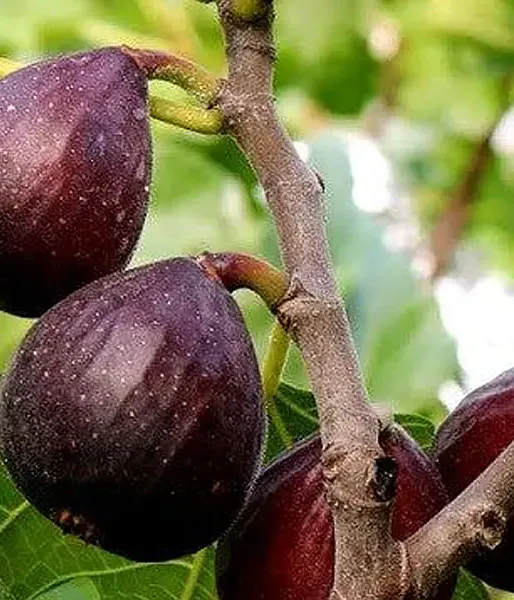
Fig Tree (Ficus carica) NEGRONNE
New
Fig Tree (Ficus carica) NEGRONNE
Specifications
Height at sale60-80cm
Pot2,5l
Sell as2 year old
Ripening timeAugust-October
The standard delivery time is 2-5 working days.(except for goods "On request")
We send goods on Monday, Tuesday, Wednesday, by agreement also Thursday or Friday.
Price
39.00€
Ex Tax: 31.71€
  • Stock: In Stock
  • Model: Ficus carica

Common Fig - Variety 'Negronne'

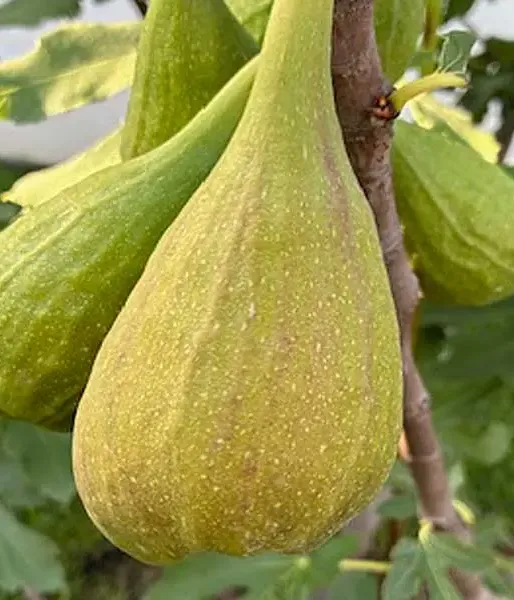
'Negronne', also known worldwide as "Violette de Bordeaux", is considered by many connoisseurs and pomologists to be one of the absolute best and tastiest figs in the world. It is a true culinary gem that perfectly combines royal French tradition with the extraordinary robustness needed for Central European climatic conditions. It will win you over with its deep dark color, complex flavor reminiscent of vintage wine, and its ability to produce a rich harvest even in smaller gardens.


Common Fig (Ficus carica) 'Negronne'

The variety originates from France and is historically linked to the royal gardens of Versailles. It is also known by the synonyms Violette de Bordeaux, Figue Poire, or Petite Aubique. As early as 1692, it was described in detail by the famous royal gardener J.B. de la Quintinie. It enchanted the French court and became a personal favorite of King Louis XIV ("The Sun King"). Its successful historical spread to the surroundings of Paris, England, and North America is direct proof of its ability to thrive and ripen even in cooler climates with a short autumn.

Main advantages of the variety:

  • World-class taste: Complex notes of forest fruits and vintage wine.
  • High cold hardiness: The wood matures extremely quickly, making it handle winter excellently.
  • Compact growth: An ideal choice for pots and small gardens.
  • Extremely high yield: Produces a huge amount of fruit per m².
  • Moisture resistance: Fruits do not crack or rot even in rainy weather.
  • Culinary use: Excellent for fresh consumption and processing (holds its shape well).
Detailed variety description: Plant
  • Growth and habit: Medium vigor. The tree naturally has a lower, more compact, and spreading growth habit. In the open ground, it reaches a height of about 2.5 – 3 meters.
  • Shaping: Very easy to shape (both as a single-trunk tree and a multi-trunk bush). Thanks to its neatness and smaller dimensions, it is an ideal candidate for permanent container growing on terraces.
  • The secret of resistance: Its high cold hardiness is due to its growth physiology – the tree grows moderately, and the new wood matures and hardens extremely quickly already during the summer (even in partial shade).
Fruits and flavor profile
  • 1st crop (Summer / Breba): Ripens from early July on last year's wood. Production is very regular. The fruits are medium-sized (approx. 50 g), with a characteristic egg (pear) shape. The thin skin is dark purple to coal-black. The deep red, wonderfully creamy flesh has a delicate taste with notes of red berries.
  • 2nd crop (Main autumn): Fruits very heavily from mid-August to October on new shoots. The fruits are smaller (35 – 45 g), blue-black with light spots and a slightly thicker skin. The taste is extremely concentrated, jammy, with a perfect balance between sugar and forest fruit notes (reminiscent of vintage wine).
Growing characteristics and agrotechnics
  • Pollination and resistance:
    • Pollination: The variety is parthenocarpic (self-fertile) and belongs to the Adriatic botanical group.
    • Moisture resistance: A huge advantage of both crop waves is their high resistance to bad weather (fruits do not crack or rot in the rain).
    • Cold hardiness and planting: Very high (down to -17 °C). Ideally, plant 2 to 3-year-old trees in the open ground, and in cooler locations, protect the trunk until it reaches a diameter of 6 – 7 cm.
  • Agrotechnics and harvesting tips:
    • Sun requirements (Tips from Vienna): The autumn fruit set is extremely rich (up to 300 figs on a small tree). To ensure as many fruits ripen as possible, the tree must be in full sun during September and October. When light decreases at the turn of October/November, the quality of the last fruits drops.
    • Harvesting tip: Do not let the autumn fruits overripen on the tree. If they stay there too long, they lose juice (dry out) and the skin feels unpleasantly thick. Harvest them when they are soft but still full of juice.

Disadvantages of the variety:

  • Smaller fruits: Especially the autumn crop produces smaller fruits (approx. 35 g).
  • Thicker skin when overripe: If autumn fruits are left on the tree too long, the skin can feel thicker and drier.
  • Sun requirements in autumn: Requires full sun during September and October to ripen the entire massive autumn crop.

Write a review

Note: HTML is not translated!
Rating
Bad Good
reCAPTCHA verification failed! Please try again.
Hurmi Kaki FUYU is one of Japan's large-fruited varieties, popular because the fruit can be eaten directly from the tree when ripe. In our country, it..
Price
39.00€
Ex Tax:31.71€
Add to Cart
Hurmi Kaki ROJO BRILLANTE is one of the Japanese large-fruited varieties, popular because the fruit is of the highest quality. In our country it can b..
Price
39.00€
Ex Tax:31.71€
Add to Cart