












Extreme Frost and Early Harvest (Part 2): Introducing the Cherries 'Agris', 'Jānis', and 'Ovstuzhenka'
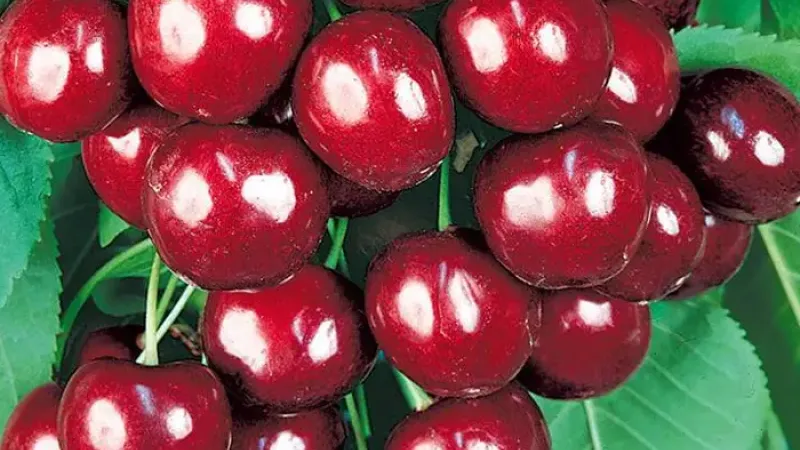
Extreme Frost and Early Harvest (Part 2): Introducing the Cherries 'Agris', 'Jānis', and 'Ovstuzhenka'
In the first part of our guide to Eastern European and Nordic cherries, we introduced varieties that define extreme size and late harvesting. However, for those growers who do not want to wait until the end of the summer and need trees that will withstand even the cruelest frost pockets, we bring the second part of our selection for the 2026 season.
Meet three varieties that have triumphed over nature. They offer an extremely early harvest (as early as the first half of June), high resistance of flowers to spring frosts, and above all, an exceptional taste born in the laboratories of Latvia and Russia.
“Early cherries are often a huge risk due to spring frosts that destroy the flowers. However, these northern specialties were bred with a single goal: their flower buds handle temperature drops that would strip common southern varieties of their entire crop.”
1. 'Ovstuzhenka' (Овстуженка): The Low Russian Queen of Resilience
The variety 'Ovstuzhenka' from the All-Russian Research Institute of Lupine (VNIIL, registered 2001) combines the genetics of two absolute legends – the varieties 'Kompaktnaya Venyaminova' and 'Leningradskaya chernaya'. It is the ideal tree for family gardens.
Why will you fall in love with it?
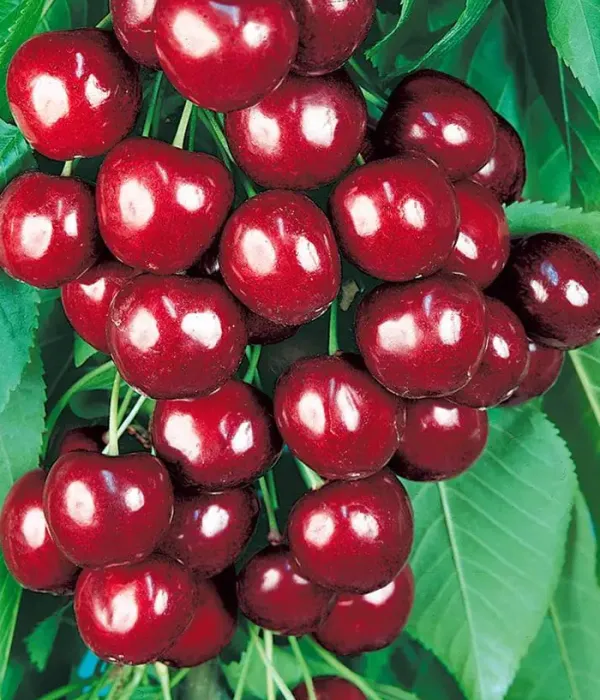
The tree grows quickly but remains small and compact (up to 3.5 - 4 m) with a spherical crown, making harvesting and protection extremely easy. The fruits are large (max. 6.7 g), dark red, and sweet with a dessert rating of 4.2 out of 5. But most importantly – the fruits do not crack in the rain.
Shield Against Diseases and Frosts
Its greatest agricultural asset is its resilience. The flowers are demonstrably resistant to spring frosts. The tree shows high natural immunity against shot-hole disease and monilinia. It is a partially self-fertile variety, but for a full yield (up to 200 c/ha), a pollinator (e.g., 'Iput' or 'Revna') is essential.
2. 'Jānis': Latvian Certainty on Midsummer
The variety 'Jānis' (registered in Latvia in 2002) comes from the legendary breeding material of P. Upītis. It didn't get its name by chance – in Nordic conditions, it ripens exactly on Midsummer's Day (St. John's Day, end of June).
The First Harvest in the Orchard
It is a vigorously growing tree with a pyramidal crown, designed to bring you the first joy of harvest in the season. The fruits are slightly smaller (3.5–4.5 g) but stand out with a beautiful heart shape and a dark red, glossy color. The flesh is soft and very juicy with a sweet-sour taste.
Beware of Temperature Shocks
Although the wood has excellent frost hardiness, the flower buds are specifically sensitive to so-called "false springs" – prolonged winter warm-ups followed by a sudden freeze. Nevertheless, 'Jānis' is considered a highly productive and disease-resistant classic, suitable for any gardener craving early fruit.
3. 'Agris': A Collector's Latvian Rarity
The trio is completed by the 'Agris' variety, created by breeders Roberts Āboliņš and Aleksandrs Maizītis. Please note that this is an exceptionally rare variety (a collector's unique item) that is almost never found on the common market.
What to Expect From It?
The tree is characterized by moderately vigorous growth, making it easier to integrate into the garden space. The fruits ripen in the third decade of June. They are medium-sized, slightly flattened, and display red to dark red hues. They will delight lovers of soft and juicy flesh, and their sweet-sour taste is rated as very good. Since it is a cross-pollinated variety, don't forget to plant it near a suitable partner blooming at the same time.
Quick Comparison: Which Northern Cherry to Choose?
| Feature | Ovstuzhenka | Jānis | Agris |
|---|---|---|---|
| Origin | Russia (VNIIL) | Latvia | Latvia (Rarity) |
| Ripening | Early June (Early) | Late June (Midsummer) | Late June |
| Tree Growth | Low, compact (up to 4 m) | Strong | Medium strong |
| Pollination | Partially self-fertile | Partially self-fertile | Cross-pollinated |
| Main Benefit | No rain cracking, Immunity | Early harvest, fungus resistance | Collector's rarity |
Conclusion of Part Two
Early cherries are usually the domain of warm climates, but these Nordic and Russian varieties prove that you can have a rich and sweet harvest at the very beginning of summer, even in sub-mountainous areas and colder valleys. If you have a small garden and fear diseases, 'Ovstuzhenka' is your choice. For an early and reliable harvest, bet on 'Jānis', and if you are looking for something that almost no one else in Central Europe has, wait for 'Agris'.
Don't forget: Although some of these varieties are partially self-fertile, to ensure a rich harvest, we always recommend combined planting with other varieties blooming at the same time.
Prepare for new planting today
View our offer of frost-hardy cherries ➤
Interested in growing in harsh conditions?
Join our community and ask experts directly about limited varieties.
Join the VIP Facebook group HERE ➤
Related Products