


Cart

Fig Tree (Ficus carica) LONGUE D'AOÛT
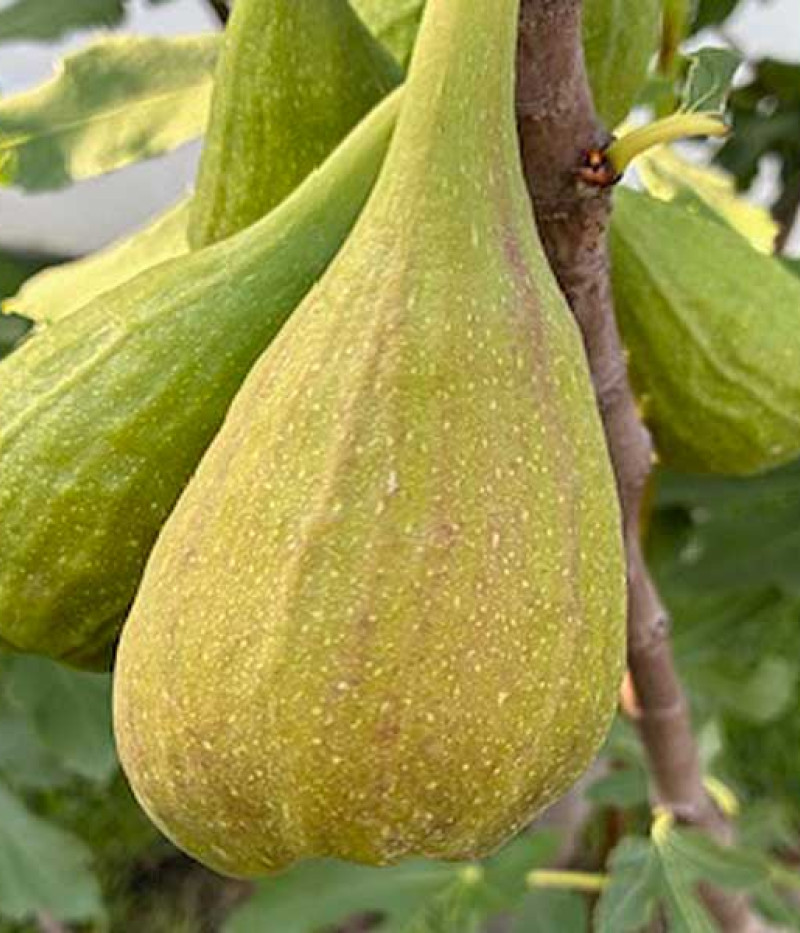
Fig Tree (Ficus carica) LONGUE D'AOÛT - Tutifruti, s.r.o.
Fig Tree (Ficus carica) LONGUE D'AOÛT
Specifications
Height at sale40cm
PotC5
Sell as2 year old
Ripening timeJuly-August/September
The standard delivery time is 2-5 working days.(except for goods "On request")
We send goods on Monday, Tuesday, Wednesday, by agreement also Thursday or Friday.
Price
29,90€
Ex Tax: 29,90€
  • Stock: In Stock
  • Model: Ficus carica

Fig Tree (Ficus carica) 'Longue d'Août'

A highly valued "Banana Fig" with two crops and rain resistance.

'Longue d'Août' (which translates to "Long August"), also known as the "Banana Fig", is an exceptionally prized, high-yielding, and robust fig variety. It earned its nicknames thanks to its first crop of fruits, which are very large, elongated, and curved, resembling a banana. It is a variety that bears fruit twice a year (remontant) and is parthenocarpic—it produces fruit without pollination. However, its greatest advantage is the high resistance of its fruits to cracking and rot, even during rainy weather. This, combined with its good frost hardiness, makes it one of the most reliable varieties for our climate.

Main advantages of the variety:

  • Two crops per year: The first in July, the main and more abundant crop from August to October.
  • Fruit resistance to cracking: Ripe figs do not crack or rot even in rainy periods.
  • Very large fruits in the first crop: Elongated "banana" figs weighing 120 to 180 g.
  • Excellent sweet taste: The flesh is bright red, aromatic, and very sweet.
  • Self-fertile and high frost hardiness (down to -17°C).

Origin and Registration

  • Synonyms: Banane, Jerusalem, Banana Fig

Variety Characteristics

Tree / Bush

The plant has a spreading growth habit and, in adulthood, reaches a height of approximately 2.5 – 3 m. Depending on the pruning method, it can be grown as a tree or a shrub. It is parthenocarpic, forming fruits without the need for pollination by the fig wasp Blastophaga psenes.

Fruit
  • First (breba) crop: The figs are very large (120–180 g), elongated, initially green, gradually turning yellow to golden brown. They ripen on last year's wood.
  • Second (main) crop: The figs are smaller (60–80 g), rounder, with a darker skin. This crop is more productive and ripens on new growth.
  • Flesh: Bright red, aromatic, and very sweet.
Resistance and Requirements
  • Frost hardiness: High, down to -17°C, making it one of the hardiest varieties.
  • Disease resistance: In our conditions, there is no known susceptibility to fungal diseases or pests.
Growing Recommendations
  • Site: Requires a sheltered, sunny location (e.g., against a south-facing wall) with protection from cold northern winds.
  • Soil: Nutrient-rich and well-drained. Fig trees do not tolerate waterlogged soils.
  • Growing in the first years: It is recommended to grow young plants (the first 2–3 years) in a container and overwinter them in a frost-free location. Only then are they strong enough to be planted in the ground.
  • Winter protection: Even for mature plants, winter protection is recommended, especially for the root area (a thick layer of leaves, straw).
Harvest and Storage
  • Harvest season: The first crop in July, the main crop from mid-August to September, and in warm wine-growing regions until the end of October.

Write a review

Note: HTML is not translated!
Rating
Bad Good
Hurmi Kaki ROJO BRILLANTE is one of the Japanese large-fruited varieties, popular because the fruit is of the highest quality. In our country it can b..
Price
38,00€
Ex Tax:38,00€
Add to Cart
The winter pear variety NOJABRSKAJA (Ноябрьская) originates from the Republic of Moldova. Its name in Russian means "November pear". The t..
Price
28,00€
Ex Tax:28,00€
Add to Cart