












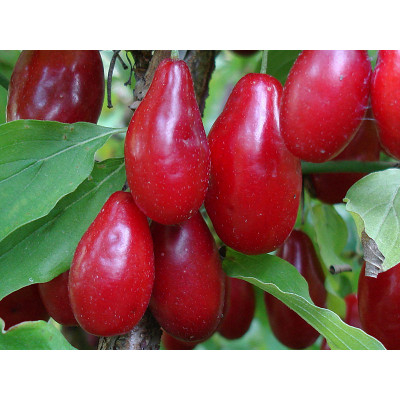





Russian Taste, American Dream, and a Geological Paradox: 7 Years of Haskap Testing in Muniakowice (Part 2)
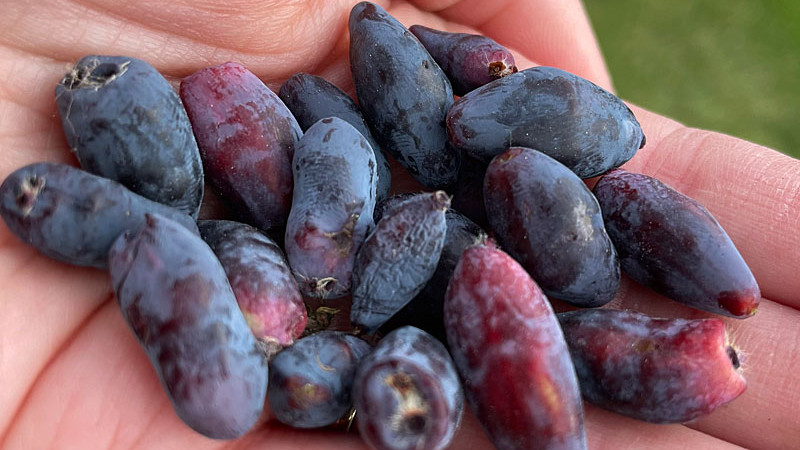
Russian Taste, American Dream, and a Geological Paradox: 7 Years of Haskap Testing in Muniakowice
In recent years, the global attention of haskap berry (Lonicera caerulea) growers has shifted toward Canada. It might have seemed that the Russian varieties, which were at the birth of this industry, were in decline and American novelties were merely marketing bait. The opposite is true. An extensive 7-year study at the in-vitro Kusibab plantation in Muniakowice, Poland (2015–2022), has provided hard data that separates myth from reality and defines a new era of cultivation for this crop in Central Europe.
“The plantation in Muniakowice served as an uncompromising sieve. In 2019, a radical step was taken – older varieties such as Tomiczka, Bakcharskij Velikan, and Morena were eradicated. Only the new wave of genetics remained, combining extreme sweetness, firmness, and the ability to thrive in conditions that would destroy other berries.”
I. Russian Genetics: Sweetness and the Strategic Early Start
The "Russian school" from the Bakchar research institute (FGUP Bakcharskoye) has maintained its crown in Europe in two key disciplines: unsurpassed sweetness and early ripening.
1. Vostorg (Delight): The Absolute Number 1 ("Number 1!")
Vostorg defines the standard for taste and technological maturity. It is described as balanced sweet with mild acidity. In 2018, it reached Brix levels of 15 – 21°. In 2019, it yielded an average of 2.20 kg/bush. It is ideal for mechanical harvesting—the fruits are firm and are not damaged during shaking. Harvest is rated as "easy."
2. Jugana: The Sugar Bomb for Gourmets
Jugana represents the extreme in sweetness (Brix up to 21°). It is one of the tastiest Russian varieties, ideal for direct sales. However, it has its limits—the stem holds the fruit very firmly, which can lead to berry damage during mechanical harvesting under wet conditions.
3. Sinij Utes (Blue Rock): Beauty That Requires Pruning
A visually attractive variety with a sweet, delicate flavor (Brix 13–15°). The challenge is its habit—it grows extremely densely. The study recommends radical thinning; otherwise, the harvester cannot shake off fruits hidden deep inside the bush.
The New Generation: Lawina and Uslada
Lawina (Candy Blue) is proving very promising for transport due to its firmness. Uslada (Pleasure) offers a pleasant taste with a hint of a bitter aftertaste, which actually resembles wild bilberries.
Strategic Advantage: While Canadian varieties ripen in July, Russian varieties open the season in the first half of June. Skipping Russian genetics would mean losing the lucrative "first fruit of the year" market.
II. American Dream in Polish Mud: Blue Banana and Giant's Heart
Varieties from Berries Unlimited entered testing in 2018. they brought new genetics, high yields, but also specific challenges.
- Blue Banana: Attracted interest with its spindle-like shape and flavor with a bilberry aftertaste. However, foliage density is extreme—fruits are so hidden that the harvester cannot collect them in one pass. It requires double harvesting.
- Giant's Heart: The taste king of 2020. Described as the most praised variety. It has a heart shape and firm skin but softens very quickly once fully ripe. The yield reached 1.45 kg/bush in 2022.
- Strawberry Sensation: The marketing name was confirmed—tasters identified notes of unripe strawberry. However, it is primarily a variety for processing as the fruits are softer. It achieved a record yield of 1.54 kg/bush.
III. Geological Paradox: Haskap on Clay-Limestone
For a long time, the dogma was: berries belong in acidic soil. The Muniakowice study smashed this myth. In a place where a highbush blueberry would die of chlorosis within a month, haskap brought record yields.
Plantation Soil Profile
| Parameter | Value | Note |
|---|---|---|
| Soil pH | 7.0 – 7.8 | Limestone bedrock (alkaline). |
| Soil Type | Heavy clay (Class II-IV) | Impermeable and compacted. |
| Humus | 2.0 % | Improved by organic applications. |
Agrotechnical Engineering: Taming the Soil
Success on limestone required deep subsoiling to 60 cm to break the clay and massive application of organic matter (lignite, manure, peat). The key was growing on raised beds (20 cm mounds), which protected roots from suffocation in the impermeable clay and isolated them from direct contact with the calcareous subsoil in the first years of growth.
IV. Dancing on Thin Ice: Phenological Traps and Spring Frosts
Haskap survives frosts of -40 °C, but that applies to the wood in deep winter. The biggest enemy in Central Europe is a premature spring.
The Lesson of 2020
A very early spring caused blooming as early as late March. Subsequent frosts lasted until mid-May and damaged more than 50% of the crop. In the coldest spots of the plantation, there was a 100% loss.
Variety Resilience: Who Survived?
- Aurora (Canada) – The Indestructible Shield: In the frosty year of 2020, it lost only approx. 17% of the crop and yielded 2.04 kg/bush. It proved to be the most reliable variety.
- Vostorg (Russia): Accustomed to a stable Siberian winter, it reacted worse to Central European temperature fluctuations (loss over 60%).
- Autumn Flowering: Observations confirmed that in southern Poland, this occurs rarely and has no negative impact on the yield, provided the plant is under irrigation in summer.
Conclusion of the Great Study
Seven years of observation in Muniakowice clearly showed that the era of experimentation is over. For commercial success, diversification is key. The combination of the resilient Canadian Aurora, the tastefully unsurpassed Russian Vostorg, and American specialties like Blue Treasure allows covering the market from June to August, even in difficult soil and climatic conditions.
Choose proven varieties for your plantation
View the offer of winners from the 7-year study ➤
Interested in detailed growing data?
Join our community, where we share experiences from real plantings.
Follow us on Facebook ➤
Do you have experience growing haskap in heavy soil or during spring frosts? Share them in the comments!
Related Products


