

















Barberry (Berberis): The Thorny Treasure with Incredible Power (Part 1 – Botany and Chemistry)
Barberry (Berberis): The Thorny Treasure with Incredible Power (Part 1 – Botany and Chemistry)
The genus Berberis, known as barberry, has fascinated humanity for millennia. For ancient civilizations, it was a sacred symbol; for folk healers, it was a source of potent medicine; and for modern gardeners, it is often just a hardy hedge.
“Yet beneath the thorny surface lies one of the most complex and biologically active genera in the plant kingdom. Its yellow wood signals the presence of the powerful alkaloid berberine, while its fruits, known in Persia as 'Zereshk,' are a nutritional powerhouse.”
In the first part of our guide, we will delve into the botanical essence of this genus and uncover the fascinating chemical cocktail that makes barberry a unique source of both medicine and nutrition.
1. A Botanical Portrait: Thorny Beauty from the Mountains
The genus Berberis contributes the main bulk of the Berberidaceae family and includes approximately 450 to 500 species. Its home is the mountains of the Himalayas, as well as the Andes in South America. However, thanks to its resilience, it has spread throughout the world.
Unique Morphology:
- Yellow Wood: A characteristic feature is the yellow coloration of the inner bark and wood, a direct result of its berberine content.
- Thorns: These are typically trifid (three-parted) and evolved from modified leaves. They serve as protection against herbivores.
- Leaves: They grow in clusters on short shoots. In some species, they are deciduous (e.g., B. vulgaris), while in others, they are evergreen (e.g., B. julianae).
- Flowers: Yellow to orange flowers have an interesting feature—their stamens are irritable and snap inward when touched by an insect, ensuring pollination.
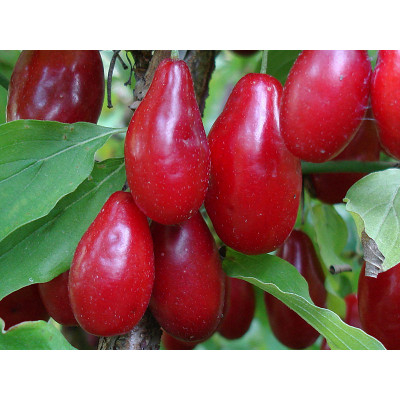
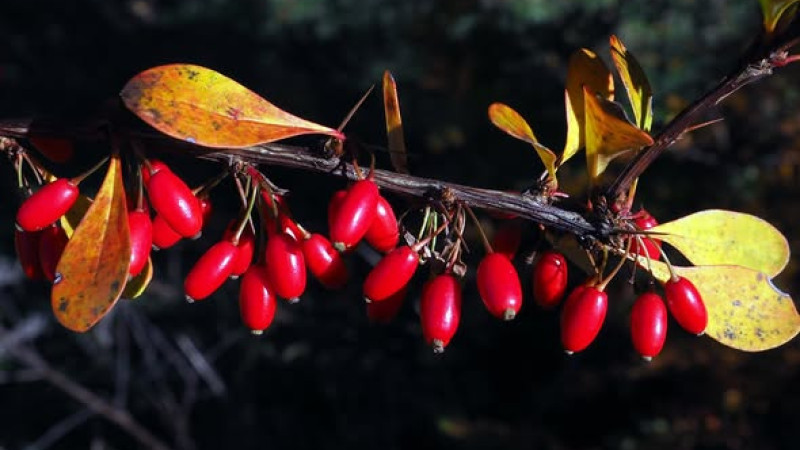
- Fruits: Juicy berries of various colors (red, blue, black), often with a tart taste and high Vitamin C content.
2. Key Species You Should Know
- Berberis vulgaris (Common Barberry): Our native species with elongated red berries that are edible and rich in vitamins.
- Berberis thunbergii (Japanese Barberry): A popular ornamental shrub from Japan, often with red leaves (f. atropurpurea).
- Berberis aristata (Indian Barberry): A Himalayan species that is a key source of berberine in Ayurveda.
3. The Chemical Treasure Trove: What's Hidden in the Roots and Berries?
Barberry is a true chemical factory. Each part of the plant has a different composition and use.
Alkaloids – The Power Hidden in the Roots
The most significant group of compounds are isoquinoline alkaloids.
- Berberine: The "king" of alkaloids in barberry. It is found mainly in the root bark and is responsible for the yellow color and potent medicinal effects (antibacterial, anti-diabetic).
- Berbamine and Palmatine: Other important alkaloids that synergistically support the effects of berberine.
Nutritional Wealth of the Berries
Barberry fruits are not just "decorations." They are nutrient-dense superfoods.
- Vitamin C: B. vulgaris berries are exceptionally rich in vitamin C (up to 156 mg/100g), giving them their tart taste and strong antioxidant potential.
- Anthocyanins: These pigments give the berries their color (red, blue, black) and act as powerful antioxidants.
- Organic Acids: Malic and citric acids are responsible for the refreshing taste.
- Minerals: The berries are rich in iron, zinc, and potassium.
Caution with Unripe Berries!
While ripe berries are edible and healthy, unripe berries can contain higher amounts of alkaloids and be mildly toxic. The seeds also contain alkaloids, so it is recommended to consume mainly the pulp or processed products.
Quick Overview of Bioactive Compounds
Chemical Map of Barberry
| Plant Part | Dominant Compounds | Main Significance |
|---|---|---|
| Root and Bark | Alkaloids (Berberine) | Potent medicinal effects (antibacterial, metabolic). |
| Berries | Vitamin C, organic acids, anthocyanins, minerals | Nutrition, immunity, antioxidants. |
| Leaves | Polyphenols, flavonoids | Antioxidant protection. |
Conclusion of Part 1
The phytochemical profile of the genus Berberis is proof of extraordinary biochemical complexity. While the roots hide potent alkaloids led by berberine, the berries offer a refreshing cocktail of vitamins and antioxidants. This duality makes barberry a unique plant—it is simultaneously a powerful medicine and a nutritious food. In the next part of our guide, we will look at how this chemical treasure trove translates into specific, scientifically proven health benefits.
Want to learn even more?
This article is just the beginning. If you want to dive deeper into the world of gardening, get exclusive tips, and access articles ahead of time, join our community!
Follow us on our Facebook page and always be one step ahead.
Were you surprised that the common barberry is such a chemical factory? Did you know about its berberine content? Let us know in the comments!