

















All About Apricots: Origin, Botany, and Growing Needs
A Guide to the World of Apricots: Their True Origin, Anatomy, and the Secret of Successful Growing
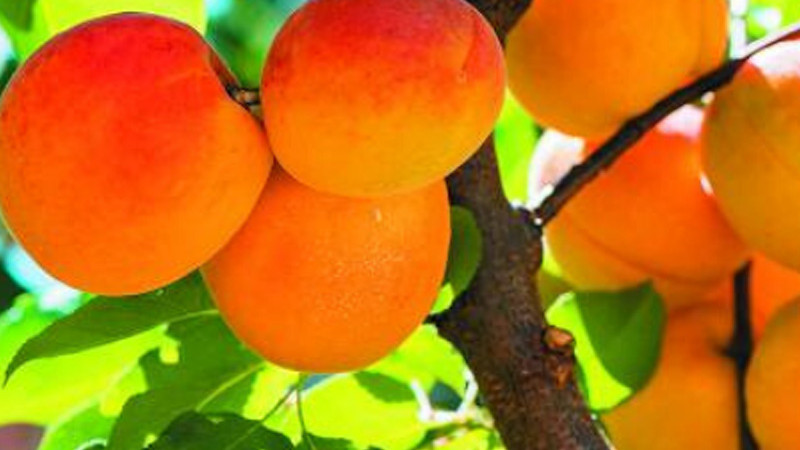
Ancient poets and farmers called it the "golden egg of the sun" because of its bright color and velvety surface. The apricot is a botanical traveler that has survived millennia of evolution and domestication. Its journey began on the mountain slopes of Asia, from where it traveled along the Silk Road, survived the fall of empires, and finally took root in orchards around the world.
Although we perceive it today as a common part of our gardens, from a botanical and ecological point of view, it is an extremely interesting and resilient organism. This article will take you on a deep professional excursion into the world of apricots – from their exact taxonomic classification, through the detailed anatomy of the tree and fruit, to their specific environmental requirements.
“The scientific name armeniaca was based on a historical error. The Romans assumed that the apricot originated in Armenia. However, the true home of this fruit is the mountainous regions of China.”
1. Taxonomy and Origin of the Name
From a botanical point of view, the apricot belongs to one of the largest families of angiosperms, the rose family (Rosaceae), which also includes apples, strawberries, and almonds.
Taxonomic Hierarchy
| Family | Rosaceae (Rose family) |
| Subfamily | Prunoideae (Stone fruits) |
| Genus | Prunus (Plum/Stone fruit trees) |
| Species | Prunus armeniaca L. |
How did the name originate? The Romans named it by combining words, the basis being the Latin "praecocia" (early ripening). Another influence was the Arabic term "albarquq," referring to the short ripening time compared to peaches.
2. True Origin and Historical Distribution
It is generally accepted that the primary center of origin is the northern and northwestern provinces of China, and probably also Korea and Japan. Domestication took place there more than 3000 years ago. From Asia, the apricot gradually spread through the Persian Empire to Asia Minor and the Mediterranean, where it found ideal conditions for its adaptation.
The Romans brought it to Europe via Greece and Italy. It reached North America thanks to English travelers and Spanish missionaries (California).
3. Botanical Characteristics of the Tree
The apricot is a deciduous tree that reaches a height of 8 to 12 meters in adulthood. In commercial orchards, however, it is maintained at lower heights by pruning to facilitate harvesting.
- Trunk and Crown: The trunk reaches an average of 35 to 40 cm; the bark is grayish-brown. The crown is dense, widely spreading with twisted branches.
- Leaves: They are oval with a sharp tip, finely serrated edges, and 5 to 9 cm long.
- Flowers: Blooms very early (March - May). The flowers grow singly or in pairs even before the leaves emerge. They have 5 white to pale pink petals.
4. Fruit Morphology: A Drupe
The apricot fruit is botanically classified as a drupe. Its development takes 3 to 6 months.
Anatomy of the Fruit
The fruit consists of an exocarp (skin) and a mesocarp (fleshy pulp). These layers surround a hard, woody stone (endocarp), inside which is the seed – the kernel. A characteristic feature of the fruit is a longitudinal groove (suture) from the stem to the apex.
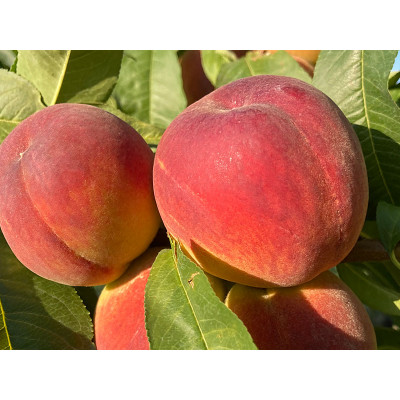
The skin changes during ripening from green to yellow to deep orange, often with a red blush. The surface can be smooth or velvety (pubescent). The kernels in the stone are divided into sweet and bitter (bitterness is caused by the glycoside amygdalin).
5. Ecological and Growing Requirements
The apricot exhibits considerable drought tolerance, but has very specific climatic requirements.
Climate and Chilling Requirement
A Mediterranean climate with long, hot summers and cool winters is ideal. To properly break dormancy, the tree absolutely needs 400 to 1000 chill hours (temperatures below 7.2 °C). Therefore, it is not suitable for subtropical areas. Its greatest weakness in our latitudes is early flowering and the associated sensitivity to spring frosts.
Water and Soil
Apricots prefer a drier climate. High air humidity is undesirable because it promotes monilia and fruit cracking. The tree requires well-drained, deep loamy soil (pH 6.0 – 7.0). Strictly avoid heavy, waterlogged soils that cause root rot, as well as purely sandy soils.
6. Species Diversity
In addition to the common apricot (P. armeniaca), we recognize other botanical species within the Armeniaca section, which are often used in breeding to increase frost resistance:
- Prunus sibirica L. (Siberian apricot)
- Prunus mandshurica (Manchurian apricot)
- Prunus mume (Japanese apricot / Chinese plum)
- Prunus brigantina (Alpine apricot)
Conclusion
The apricot is a masterpiece of botanical adaptation. A tree that originally defied the harsh conditions of the Asian mountains has conquered the whole world thanks to its genetic plasticity. From deep, well-drained soils to the cold winters it needs for its rest, the apricot is proof that the sweetest fruits often require a specific balance of natural forces. Understanding its botanical characteristics and ecological requirements is not just an academic matter, but the key to successfully growing and protecting this "golden egg of the sun" for future generations.
Grow your own "golden egg of the sun"
View our offer of resilient apricot varieties ➤
Interested in the science behind fruit growing?
Join our community and gain access to expert advice and articles.
Follow us on Facebook ➤