

















SCDP Băneasa: Innovation and Robotics in Romanian Fruit Growing
Where History Meets Robotics: Introducing the Băneasa Research Station
Just a short distance from Bucharest stands an institution writing a fascinating story of resurrection. The Fruit Research and Development Station (SCDP) Băneasa resides in a historic building from 1938, yet inside, it harbors technologies of the future.
As recently as 2015, this station was fighting for bare survival. Today, it is a dynamic center that not only breeds excellent apricots and peaches but also develops its own agricultural robots and tests cultivation under solar panels. It is proof that Romanian fruit growing belongs to the European elite.
“Băneasa is the place where the tradition of stone fruit breeding meets artificial intelligence. It is an incubator for young talent and technologies that are changing the face of the modern orchard.”
From Decline to Innovative Avant-Garde
The station's history is like a rollercoaster. After the fall of the regime and years of underfunding, its fate seemed sealed. The turning point came after 2015 with the arrival of new management and a young team (the average age of researchers is only 26–28 years!). Today, SCDP Băneasa actively draws EU funds and implements projects that inspire the entire Balkan fruit growing sector.
What Does the Station Do for You, the Growers?
1. Breeding of Heat-Loving Stone Fruits
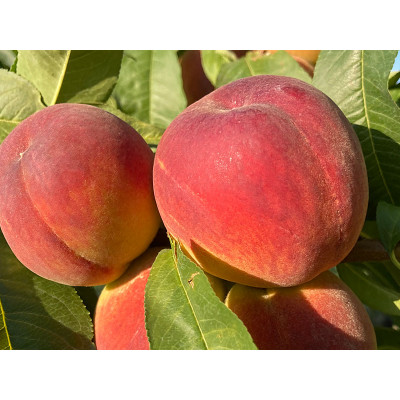
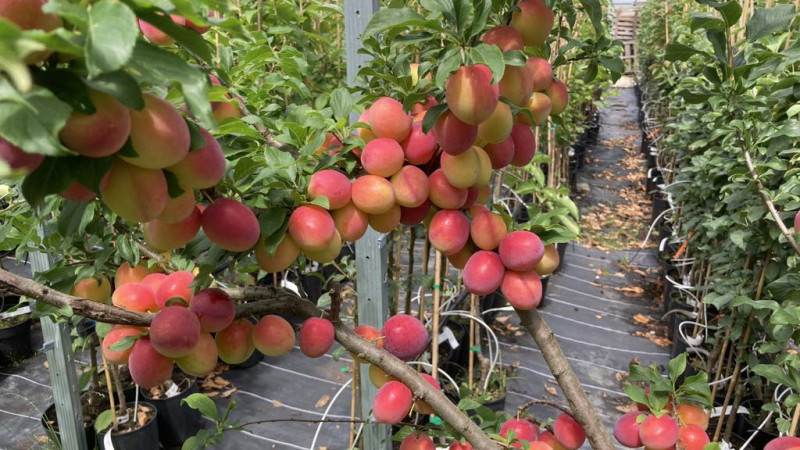
Băneasa is home to 14 varieties of apricots, peaches, and nectarines. These varieties are bred specifically for the conditions of southern Romania, which means they must handle hot summers but also treacherous spring frosts. This is exactly where varieties like the peach 'Triumf' or the apricot 'Viorica' come from.
Strategic Consulting
The station plays a key role in fighting climate change. It actively advises farmers to move the most sensitive species to more suitable areas (e.g., Dobrogea) and not to be afraid to diversify, for example by planting mulberries or cherries.
2. "Robo-Fermier" Project
Labor shortage is a problem everywhere. In Băneasa, they responded by developing the first Romanian orchard robot. This autonomous machine can perform basic tasks in the orchard, saving human labor and increasing efficiency. The project also received recognition from OECD experts.
3. Agri-Voltaics: Energy and Fruit in One
The pilot project "Horti-Voltaic" explores the symbiosis between cultivation (e.g., of strawberries) and photovoltaic panels. The panels not only produce electricity but also protect plants from extreme sun and reduce water evaporation. It is the answer to the question of how to use land at 200%.
Return of the Mulberry
Together with Bulgarian partners, the station investigates the potential of mulberries. The goal is to use not only the leaves (for silk) but mainly the fruits as a superfood and a source of natural sweeteners.
Why Trust Varieties from Băneasa?
When you buy a tree with a "pdigree" from SCDP Băneasa, you are not just buying a plant. You are buying the result of the work of an institution that understands modern challenges. Their varieties are not relics of the past but are tested under conditions where economic efficiency and climate resilience are emphasized.
SCDP Băneasa in Brief
| Location | Bucharest (North) |
| Specialization | Apricots, Peaches, Nectarines |
| Innovations | Robotics, Agri-Voltaics |
| Team | Young scientists (average age 28) |
Conclusion
The Băneasa Research Station is proof that great things can be done in agriculture too. From a "Cinderella," it has become a leader showing the way to the entire sector. We are glad to bring the results of their work directly to your gardens.
Interested in the backstage of fruit growing?
Join our community and stay in the loop.
Follow us on Facebook ➤