












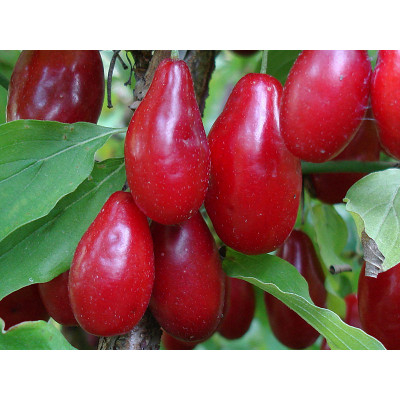





Great Analysis of Haskap Berry: 7 Years of Testing Yield, Taste, and Mechanization Under Extreme Conditions
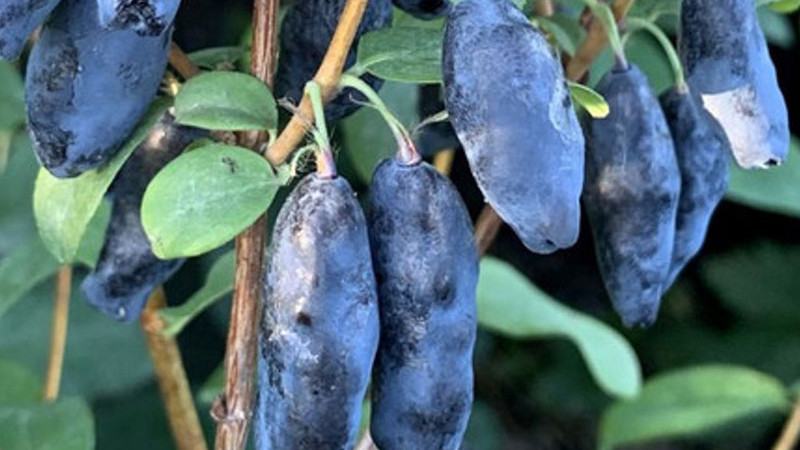
Great Analysis of Haskap: 7 Years of Testing Yield, Taste, and Mechanization Under Extreme Conditions
The Haskap berry (Lonicera caerulea) has traveled from a botanical curiosity to a commercial crop over the last decade. While the first plantings were a gamble, today we have hard data available. The in-vitro Kusibab plantation in southern Poland became an open-air laboratory where the wheat was separated from the chaff under uncompromising conditions.
This extensive material provides a deep insight into the productivity, taste profile, resilience, and suitability for mechanical harvesting of Russian, Canadian, and American varieties based on observations from 2015 to 2022.
“In 2019, a radical step was taken – the original Polish varieties Wojtek and Zojka were removed (eradicated) from the plantation. The reason? They did not stand up to the competition of new genetic lines in terms of suitability for mechanical harvesting and fruit quality. Sentiment has no place in commercial growing.”
Part 1: Clash of Titans – Analysis of Productivity and Survival
Battlefield: Extreme Conditions as a Resilience Test
To understand the weight of the measured results, we must first define the environment. The plantation in the village of Muniakowice (Krakow region) is located at an altitude of 300 m above sea level with an annual rainfall of approx. 600 mm.
What is shocking for berry growers, however, are the soil conditions. The soil is heavy, clayey, and impermeable. The most crucial parameter, however, is the soil pH, which ranges from 7.0 to 7.8. Unlike blueberries, which require acidic soil, this study proves that Haskap can thrive and produce high yields even on calcareous subsoil if proper agrotechnics are ensured.
1. The Aurora Phenomenon: The Benchmark of Reliability
If we had to choose the "workhorse" of the plantation based on data from 2018–2022, it would be the Canadian variety Aurora.
- Yield Growth: While in 2018 (3rd year after planting) the yield was 0.78 kg/bush, in 2019 it jumped to 2.45 kg/bush.
- Stability in Crisis: The year 2020 was a nightmare (warm spring followed by frosts and a wet summer). While other varieties failed, Aurora maintained a yield of 2.04 kg/bush. In 2022, the yield stabilized at 1.8 kg/bush.
Verdict: Aurora is the most reliable variety for commercial cultivation, with fruits holding firmly on the bush yet suitable for mechanical harvesting.
2. Russian Offensive: Taste vs. Yield
Russian varieties from Bakchar are known for their taste, but data revealed their variability in yields.
- Vostorg (Delight): Marked as "Number 1!" and the best Russian variety in the notes. In 2019, it achieved a yield of 2.20 kg/bush. However, in the critical year 2020, it dropped to 0.85 kg/bush (extreme spring frosts destroyed the flowers).
- Jugana: A similar story. From 0.54 kg/bush in 2019, it fell to 0.24 kg/bush in 2020. Although it has extremely sweet fruits, its commercial stability in Polish conditions is lower.
3. Boreal Series: Pushing the Boundaries of Possible
Canadian varieties bred for late harvesting brought the biggest surprises.
Record Holder Boreal Beauty
This variety rewrote the tables in 2019 with an incredible average yield of 4.20 kg per bush. That is a value far exceeding the standard. Despite fluctuations in subsequent years, it is the variety with the greatest potential for extending the season.
Boreal Blizzard: Variety with the largest fruits (weight up to 3.60 g). Yields are steadily growing, but the disadvantage is the softer consistency of the fruit, which predisposes it more for hand picking.
4. American Challenge: Blue Treasure and Giant's Heart
Varieties from Berries Unlimited were included in the study later, but data from 2022 suggest they are catching up with the elite.
- Giant's Heart: Shows consistent growth – from 0.73 kg (2020) to 1.45 kg (2022). Fruits are firm.
- Blue Treasure: In 2022, it reached 1.3 kg/bush. Characterized by potential for mechanical harvesting.
Critical Year 2020: Climate Change Stress Test
Data from 2020 are the most valuable for growers. An early spring triggered flowering as early as March, but subsequent May frosts destroyed 50 to 100% of the crop in some places.
- Winners: Aurora (loss only approx. 15%) and Honeybee (good pollinator, maintained a decent yield).
- Losers: Russian varieties recorded a yield drop of 50% or more.
Part 2: The End of the Sourness Myth – Sugar Content and Taste
For years, Haskap was perceived as a "sour berry for jam". However, the study reveals a quiet revolution. New varieties often surpass blueberries in sugar content (Brix) and taste complexity.
1. Russian School: Kings of Sugar Content
If we are looking for absolute record holders in sweetness, we must look at genetics from Bakchar.
- JUGANA – Sweet Bomb: In 2018, it reached Brix values in the range of 17 – 21°. These are numbers exceptional in the berry world. Even in worse years, it maintains a high standard of 13–15° Brix.
- VOSTORG (Delight): Repeatedly labeled as "Number 1!". In 2018, it also reached 21° Brix. Its taste is balanced, sweet with a hint of acidity.
- SINIJ UTES: Offers a stable sweet and mild taste (13–15° Brix).
2. Canadian Boreal Series: When Taste Wins Over Texture
Taste Favorite Boreal Blizzard
The study notes state: "Our favorite because of the taste! Very tasty." Brix is around 13–15°. However, there is a catch – the fruits are "very soft". It is an ideal variety for gourmets, but transport is risky.
Boreal Beast: Offers "pleasant, very mild taste" and is excellent just a week after coloring.
Boreal Beauty: Is extremely firm, but initially "tart, a bit sour" in taste. The taste improves only at full maturity.
3. Texture and "Mouthfeel"
Modern organoleptics deals not only with sweetness but also with the feeling in the mouth.
- BLUE TREASURE (USA): Brought a unique feature – "butter-like texture". Although it has a slight bitterness in the aftertaste, this texture is very attractive.
- AURORA: Universal choice. Stably sweet (13–16° Brix) without extreme fluctuations.
- STRAWBERRY SENSATION: The name is not misleading. Tasters identified "notes of unripe strawberry" in it.
Weather Impact on Sweetness
The analysis shows that genetics isn't everything. The hot year 2018 brought record Brix values (21°), while the wet year 2020 lowered them by 2 to 5 degrees. In rainy years, it is necessary to leave the fruit on the bushes longer, which requires non-dropping varieties (like Aurora).
Part 3: Trial by Fire and Steel – Mechanical Harvesting Test
Cultivation has reached a breaking point. Hand picking is expensive, machines are taking over. A test with the Oxbo 9300 harvester was conducted on the plantation aiming to find a variety that the machine won't destroy and that can be sold as fresh fruit.
1. Absolute Winner: Boreal Beauty
If there is a variety created for the harvester, it is this one. In reports, it is described in superlatives.
- Why it won: All berries ripen evenly (one-pass harvest).
- Habit: The bush is spherical with firm branches that do not break under vibrations.
- Result: Fruits remain undamaged after harvesting.
2. Elite Group: Aurora, Vostorg, and Honeybee
Right after the winner follow varieties rated "very good".
- Aurora: Berries shake off easily when ripe but do not drop prematurely. Firmness is sufficient for sorting.
- Vostorg: Surprise from the East. Fruits are firm with tough skin, allowing easy mechanical harvesting.
- Honeybee: Berries hold very firmly, requiring precise machine adjustment, but the result is a clean harvest.
3. American Surprise: Blue Treasure
The variety Blue Treasure showed very good mechanical harvesting with low losses in 2021 and 2022. Berries have a buttery texture but firm skin, so they "did not leak". The study labels it a "definitely commercial variety".
Varieties That Failed in the Harvester
The study was uncompromising:
Boreal Blizzard: Fruits are too heavy and soft, they burst upon impact. Intended only for hand picking.
Sinij Utes: The bush is too dense, fruits are deep inside and cannot be shaken off at once.
Jugana: Hard to harvest when soil is wet – often the stem tears off with a piece of flesh.
Morphology of Success
Ideal for mechanical harvesting are barrel-shaped, oval, or spherical fruits (Aurora, Beauty). Long and spindle-shaped fruits (Blizzard) break when shaken.
Part 4: Canadian Offensive – ""Boreal"" Series
The arrival of the "Boreal" series from the University of Saskatchewan changed the rules of the game. These varieties extended the season by a whole month.
Strategic Shift: July and August Are the New June
While Russian varieties and Aurora end in June, the Boreal series only begins then. The harvest season has shifted thanks to them until the 3rd decade of July, in some years until August.
Detailed Look at the Series:
- Boreal Beauty: Unstoppable machine. Record productivity (up to 4.20 kg/bush in 2019). It is the industrial workhorse for harvesters and supermarkets.
- Boreal Blizzard: Taste and size giant. Fruits are huge (up to 3.60 g) and taste excellent. Due to softness, however, it is the queen of direct sales and gourmets, not transport.
- Boreal Beast: Bridge between worlds. Bred to bridge the flowering time between Beauty and Blizzard. Has excellent taste ("very mild") and grows upright.
Synergy
Planting the entire Boreal series next to each other maximizes yields thanks to perfect flowering overlap. Moreover, this series proved to be the most resistant to summer heat and does not suffer from autumn flowering.
Conclusion of the Great Study
Results from Muniakowice give a clear guide. The era of experimentation is over.
- If you want certainty and reliability: Choose the Aurora variety.
- If you want record yields and mechanical harvesting for chains: You must have Boreal Beauty.
- If you want the best taste for direct sales: Vostorg (Russia) and Boreal Blizzard (Canada) reign.
- If you are looking for a buttery texture: Try the American Blue Treasure.
Haskap berry is no longer just a supplement. With these varieties, it becomes a full-fledged dessert fruit capable of competing with anyone.
Choose the Test Winners for Your Garden
View the offer of Aurora, Boreal, and Vostorg varieties ➤
Discuss Growing with Experts!
Join our community and share your experiences with these varieties.
Follow us on Facebook ➤
Related Products


