

















Serviceberry (Amelanchier): Comparison of species, effects, and why it is healthier than blueberries
Juneberry: Which of the 3 Faces of this Superfruit is Right for You? (Saskatoon vs. European vs. Running Serviceberry)
In an era where we increasingly turn to nature for health and vitality, we are rediscovering hidden treasures that our ancestors knew, but we have forgotten. One such treasure is the genus Amelanchier, commonly known as Juneberry or Serviceberry. These low-maintenance shrubs, which combine ornamental beauty with exceptional nutritional value, offer fruits that are not only deliciously sweet but also packed with substances proven to have health benefits.
“Forget the tart Aronia berry. The Juneberry is its sweet and mild counterpart, which you will love not only for its taste but also for its hidden power.”
Based on scientific studies, we will reveal three different faces of this superfruit. We will compare three key species—the American Amelanchier alnifolia, the European Amelanchier ovalis, and the indestructible Amelanchier spicata—so you can choose the one that is right for your garden and your health.
1. The Three Faces of Juneberry: Which to Choose?
Each of these species has its own unique personality and strengths.
Amelanchier alnifolia (Saskatoon Berry) – The Generous Giant for Snacking
Also known as the Saskatoon berry, this is the star among juneberries when it comes to fruit size and taste.
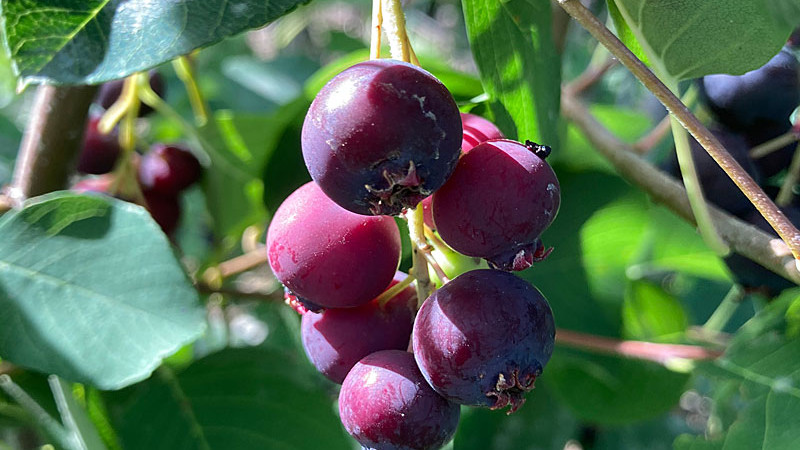
- The Berries: They are the largest (up to 12.5 mm in diameter), dark purple, and thanks to a high sugar content (14.3%) and low acidity, they are irresistibly sweet and mild. However, they are softer, making them ideal for immediate consumption or processing.
- Who is it for? For anyone looking primarily for delicious fruit for fresh eating and making jams. This is the choice for flavor enthusiasts.
Profile: Amelanchier alnifolia
- Key Feature: Largest and very sweet berries
- Taste: Excellent, mild, sweet
- Antioxidant Content: Medium
- Use: Fresh eating, jams, pies
Amelanchier ovalis (European Serviceberry) – The Unassuming Antioxidant Champion
This European species is proof that strength doesn't come in size.
- The Berries: They are the smallest (only 7.3 mm in diameter) and less pronounced in flavor. Their real treasure, however, lies within. They contain by far the highest amount of polyphenols (up to 356 mg/100 g), including anthocyanins and flavonoids. They are also the firmest, which makes them easy to handle.
- Who is it for? For those seeking maximum health benefits. If you want to use juneberry as a functional food and a source of the most potent antioxidants, this is your choice.
Profile: Amelanchier ovalis
- Key Feature: Highest content of antioxidants (polyphenols)
- Taste: Mild, slightly bland
- Antioxidant Content: Very High
- Use: Functional food, freezing, extracts
Amelanchier spicata (Running Serviceberry) – The Hardy All-Rounder for Any Garden
This species embodies resilience and perfect balance.
- The Berries: They are almost as large as A. alnifolia (11.9 mm in diameter), but also firm and very dark. They have the highest sugar content (up to 14.7%) and, according to some studies, the highest vitamin C content. Its greatest asset, however, is its extreme frost hardiness, down to -50 °C (-58 °F).
- Who is it for? It is the perfect compromise. It offers large, sweet berries along with incredible resilience. An ideal choice for higher altitudes and harsher climates.
Profile: Amelanchier spicata
- Key Feature: Extreme frost hardiness and balanced properties
- Taste: Excellent, very sweet
- Antioxidant Content: Lower
- Use: All-purpose, ideal for challenging conditions
The Sweet Secret Revealed: What's Inside the Berries?
Regardless of the species, all juneberries share several key characteristics that define their taste and nutritional value.
- Natural Sweetness: A high content of a mixture of sugars (glucose, fructose, sucrose, etc.) gives them a rich, sweet taste.
- Extremely Low Acidity: This is their secret weapon. A minimal content of organic acids means the berries have no tartness or sharpness, making them perfect for eating fresh.
- The Hidden Power of Polyphenols: These compounds, especially anthocyanins (responsible for the dark color) and flavonols (quercetin), are the main carriers of antioxidant effects. They protect our cells from damage and aging.
- Vitamins and Minerals: The berries are a source of B vitamins, E, PP, rutin, and minerals such as potassium, calcium, magnesium, iron, and manganese. The vitamin C content varies depending on the location and species.
Nature's Pharmacy in Action: How Juneberry Benefits the Body
Scientific studies have confirmed that the substances in juneberries are not just theoretical; they have a real and measurable impact on human health.
- An Elixir for Heart and Vessels:
- Strengthens capillaries and increases their elasticity.
- Helps lower blood pressure and cholesterol levels.
- Reduces blood clotting, thus acting as a prevention against thrombosis and heart attacks.
- Support for Blood and Vitality:
- Surprisingly, the polysaccharides in the berries stimulate the production of red blood cells and hemoglobin.
- They increase the resistance of cell membranes to damage.
- Protection for Organs and Metabolism:
- Substances like betaine protect the stomach from ulcers and prevent fatty liver disease.
- They harmonize metabolic processes overall.
- Increased Resistance to Stress:
- Juneberry acts as a general tonic that increases the body's adaptive reserves, helping it to cope better with stress.
Quick Selection Guide
| If you're looking for... | Your ideal choice is... | Why? |
|---|---|---|
| The best TASTE & large berries | Amelanchier alnifolia (Saskatoon) | The largest and deliciously sweet berries, perfect for snacking. |
| Maximum HEALTH BENEFITS | Amelanchier ovalis (European) | Absolutely the highest content of protective polyphenols and antioxidants. |
| HARDINESS & versatility | Amelanchier spicata (Running) | Extreme frost resistance and a great balance of taste and fruit size. |
Conclusion
The Juneberry is living proof that nature often offers us the most effective remedies in the most delicious form. Whether you choose the large-fruited A. alnifolia for its taste, A. ovalis for its health power, or A. spicata for its indestructibility, you can't go wrong. Each of them will bring not only beauty to your garden but also the promise of a tasty and healthy addition to your diet.
Discover Your Superfruit!
Discover the diversity of Juneberries in our collection and find the right species for your garden.
Want to learn even more?
This article is just the beginning. If you want to dive deeper into the world of gardening, get exclusive tips, and access articles ahead of time, join our community!
Follow us on our Facebook page and always be one step ahead.
Which Juneberry species appealed to you the most? Do you prefer taste, health benefits, or resilience? Share your opinion in the comments!
Related Products

