

















Guide to choosing heat-loving blueberries: 3 myths that prevent you from getting a rich harvest
A Guide to Choosing Warm-Climate Blueberries: 3 Myths Preventing a Bountiful Harvest
Growing blueberries in our increasingly warmer climates presents new challenges. Classic northern varieties (Northern Highbush) often suffer in the summer heat, forcing gardeners to look for more resilient alternatives. This is where warm-climate types come into play – Southern Highbush (SHB) and Rabbiteye (RE).
“However, a lot of myths and half-truths surround these fascinating blueberries, leading to unnecessary fears and poor choices when selecting varieties. Information on forums is often based on hearsay.”
In this article, we will tackle the 3 biggest myths, explain how things really work, and provide you with practical advice so you can choose the best combination for your garden.
Myth #1: "I can't combine early and late varieties because they won't bloom at the same time."
This is the most common misconception, stemming from a misunderstanding of "chill hours" (CH)—the hours of cold a plant needs to overcome dormancy.
How it works in our climate?
- Meeting the Chill Requirement: In our region, winter lasts a long time and provides far more than 600 hours of cold. Both varieties will not only meet their requirement but massively exceed it. This levels their starting positions. By spring, both are in a state of maximum readiness.
- The Trigger – Warmth: When the weather finally warms up in spring, both varieties get the "starting gun" at the same time.
- Genetics Decide: Only now does genetics come into play. An early variety is a "sprinter"—it needs less heat (GDD - Growing Degree Days) to bloom. A late variety is a "marathon runner"—it needs more heat.
Conclusion: Although the early variety will bloom a few days sooner, in our climate, they will flower largely at the same time or with significant overlap. The difference won't be weeks, as many fear, but only a matter of days. Furthermore, blueberries bloom for a relatively long period, so the chance of them completely missing each other is almost zero.
Myth #2: "The only ideal pollinator for 'Pink Lemonade' is 'Powder Blue'."
This myth is a direct consequence of the first one. 'Pink Lemonade' is a very early variety (low CH and GDD), while 'Powder Blue' is a mid-late variety (higher CH and GDD). Theoretically, in ideal conditions, they could miss each other.
What's the reality here?
As explained, a long winter erases the difference in chill hour requirements. 'Pink Lemonade' will bloom first, but other Rabbiteye varieties like 'Climax', 'Premier', 'Tifblue', or 'Centurion' will follow just a few days later.
- Practical Experience: In our gardens, all Rabbiteye varieties bloom almost simultaneously. The difference is in days, not weeks, and their flowering periods overlap generously.
- Advice: Instead of fixating on one "ideal" pollinator, it's better to extend your harvest season by combining an early, a mid-season, and a late variety. They will pollinate each other without any problems.
Tip for Small Gardens
If you only have space for one other plant next to your 'Pink Lemonade', choose a variety like 'Tifblue'. It grows vigorously, produces abundantly, and kids will have plenty to pick.
Myth #3: "Rabbiteye blueberries have a skin that is too thick and unpleasant."
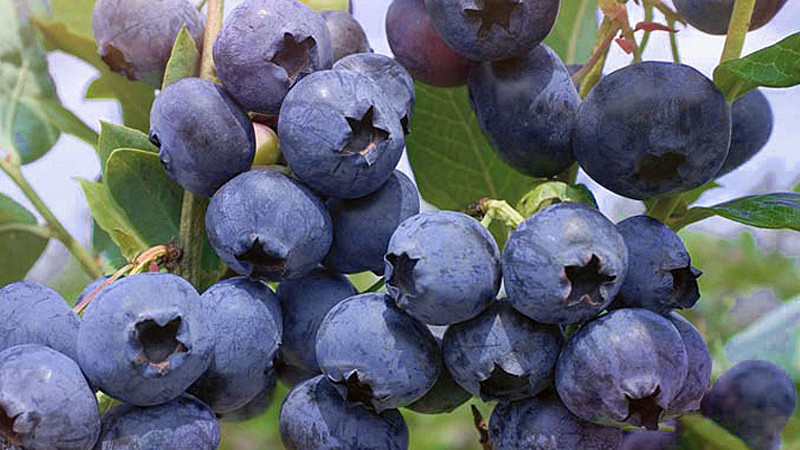
This is more a matter of preference and misunderstanding. The skin of Rabbiteye blueberries is firmer, but that is their greatest asset.
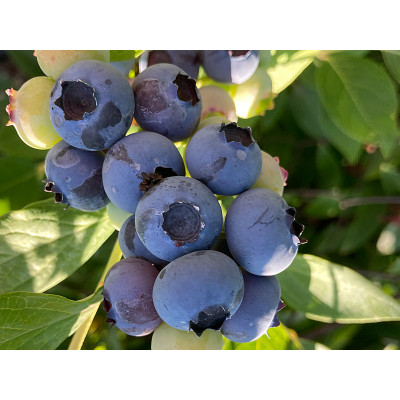
- The Pleasant "Pop": When you bite into a Rabbiteye blueberry, the firm skin offers a gentle resistance and then suddenly pops. This contrast between the firm skin and the soft, juicy pulp inside is extremely satisfying for many and evokes a sense of freshness.
- Prevents Mushiness: Unlike some thin-skinned varieties that can become mushy almost instantly in your mouth, Rabbiteye maintains its structure. Every bite is defined and textured.
- Better Shelf Life: Firmer skin means the berries are more resistant to damage and last longer after picking.
So, How to Choose? SHB vs. RE and Practical Tips
If you're hesitating between Southern Highbush (SHB) and Rabbiteye (RE) because you don't have space for both, it's like choosing between your children. The ideal is a synergy of both types, which gives you a complete portfolio of flavors. But if you must choose, consider this:
- Watering: Is your garden far from home, and can you only water once a week? Choose Rabbiteye, as it is more drought-tolerant.
- Frost Hardiness: Even though they are warm-climate varieties, they will survive in our conditions. All tested SHB and RE varieties survived down to -10 °C (14 °F) in a protected spot outdoors without any cover. However, for extreme frosts, protection is advisable.
Final Recommendation
Don't be guided by myths from online forums. Choose varieties based on your actual needs and taste preferences.
- Want a long harvest season? Combine an early (e.g., 'Climax'), a mid-season (e.g., 'Tifblue'), and a late (e.g., 'Centurion') Rabbiteye variety. They will all pollinate each other.
- Have limited space? Get at least two different varieties of the same type (either SHB or RE).
- Struggling with the heat? These varieties are the solution. The first SHB berries are exceptionally sweet and tasty, while REs are texturally interesting and just as delicious.
It's time to solve the heat problem in your blueberry patch. With this information, you can now make your own decision based on facts, not myths.
Solve Your Blueberry Problem!
Solve your blueberry heat problem and discover the world of warm-climate varieties in our selection.
Want to learn even more?
This article is just the beginning. If you want to dive deeper into the world of gardening, get exclusive tips, and access articles ahead of time, join our community!
Follow us on our Facebook page and always be one step ahead.
Which of the blueberry myths surprised you? And which warm-climate variety would you choose for your garden? Let us know in the comments!