

















My fertilization system: Maximum yield with minimum costs | Blog
My Fertilizing System: How to Achieve Maximum Yields with Minimal Costs
In today's market, flooded with "miracle" products, it's hard to find your way. The goal of this article is not to tell you what to buy. The goal is to show you a functional, logical, and above all, cost-effective fertilizing system that will bring you results without spending a fortune.
"Gardening is like cooking. You don't need 50 overpriced sauces. You need salt (macronutrients), pepper (micronutrients), and the knowledge of when and how to use them."
Forget the marketing myths and let's look at the facts and a practice that works.
Debunking the Myths: What Marketing Won't Tell You
- The Myth of "Miraculous" Properties: Fertilizers are often credited with magical abilities, like providing disease resistance. The reality is that a fertilizer is first and foremost nutrition. A healthy and well-nourished plant is naturally more resilient, but fertilizer is not a medicine or a pesticide.
- The Myth of "Purely Natural" Fertilizers: Even fertilizers labeled "natural" are the result of industrial production. Don't be fooled by pictures of untouched nature.
- The Myth of the "Ideal" NPK Ratio: No fertilizer in the world has an ideal NPK ratio for all plants and for year-round use. A plant's needs change: in the spring, they need more nitrogen (N); in the autumn, more potassium (K).
My Proven and Cost-Effective Fertilizing System
After years of experimenting, I have arrived at a simple and inexpensive system that serves its purpose. I use basic, available fertilizers, and by combining them, I cover the plants' needs throughout the season.
My Arsenal:
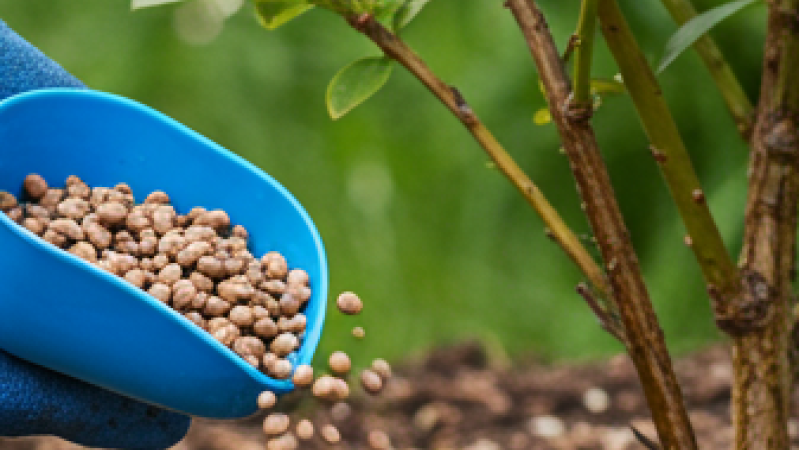
- Granulated Chicken Manure (NPK approx. 2.8-1.3-1.2): Long-term nutrition for the soil.
- Spring NPK Fertilizer (e.g., with a 14-9-10 + Mg ratio): A quick start in the spring.
- Autumn NPK Fertilizer (e.g., with a 10-5-20 + Mg, Ca ratio): Supports fruit and ripening in the autumn.
- Mikromax - Micronutrients: A "safety net" for micronutrient deficiencies.
Fertilizing Plan for Fruit Trees and Vegetables:
Phase 1: Spring (after flowering)
Goal: Support root and leaf growth.
Recipe: Granulated chicken manure + Spring NPK (1:1 ratio).
Reasoning: The chicken manure prepares the soil for the whole season, while the NPK fertilizer provides immediate nitrogen and phosphorus for explosive spring growth.
Phase 2: Summer (early July)
Goal: Flower bud differentiation for next year and fruit quality.
Recipe: Granulated chicken manure + Autumn NPK (1:2 ratio).
Reasoning: The focus shifts to fruit nutrition, so the dose of potassium from the Autumn NPK is increased.
Phase 3: Autumn (after harvest)
Goal: Wood maturation and increased frost hardiness.
Recipe: Granulated chicken manure + Autumn NPK (1:1 ratio).
Reasoning: The chicken manure is an investment in the soil for the next year, while potassium from the Autumn NPK helps the tree prepare for winter.
Mycorrhiza Analysis: When is This Deal Advantageous?
Mycorrhiza is a fascinating symbiosis, but it's not a miracle cure-all. It's a biological trade:
- The Fungus Offers: An extension of the root system and the supply of hard-to-reach nutrients (especially phosphorus) and water.
- The Plant Pays: It gives the fungus up to 20% of its sugars produced through photosynthesis.
When is this trade advantageous for the plant?
- In poor soils and under drought stress conditions.
- When the plant has enough sun to produce sugars but has trouble obtaining nutrients and water.
When is the trade disadvantageous?
- In soils with a high concentration of nutrients (from intensive fertilizing). The plant can get nutrients more cheaply on its own.
- In the shade, when the plant's ability to produce sugars is limited.
Conclusion: Mycorrhiza is a great "insurance policy" and helper in challenging conditions. However, in a well-fertilized and irrigated garden, its effect may not be as pronounced.
The Hierarchy of Success: What Really Affects Fruit Size and Taste?
The Pyramid of Importance
- Genetics (Variety): The absolute foundation. You can never turn a sour variety into a sweet one.
- Nutrition and Soil: The right ratio of nutrients (especially potassium, calcium, magnesium).
- Water: Regular watering is crucial for fruit size.
- Sun and Heat: The sugar factory. Proper thinning pruning is also important.
- Pruning and Fruit Thinning: The most effective way to increase fruit size.
- ol>
Your Garden, Your Hands
The power is not in "bio-eco-turbo" elixirs, but in your hands, your knowledge, and your pruning shears. With the right basic tools, you will achieve better results, save money, and not be a slave to your garden. Discover our range of proven basic fertilizers and everything you need for a successful season.
What is your opinion on "miracle" products in gardening? Share your experiences in the comments!
Related Products
