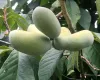
The pawpaw (Asimina triloba) is the largest edible fruit native to the temperate zone of North America. Its custard-like flesh combines notes of banana, mango and vanilla, and in Central Europe the fruit generally ripens from September into the first half of October. Differences between cultivars are considerable, however – ranging from ultra-early selections found at the northern edge of the species' natural range to late collector's rarities that may fail to ripen during a short, cool summer.
The overview below compares eight cultivars by fruit weight, sugar content, seed ratio, productivity and site requirements, so you can choose a combination that will actually crop in your own garden.
|
8
cultivars compared
|
560 g
highest reported fruit weight
|
24 °Brix
highest measured sugar content
|
−28 °C
highest reported hardiness
|
← Swipe the table sideways →
Pollination Is the First Question, Not the Last
All eight cultivars described here require cross-pollination. Pawpaw flowers carry both male and female organs, but these mature at different times, so the plant is effectively self-incompatible: to set fruit it needs pollen from another, genetically distinct individual (a second cultivar or a seedling). Planting a single cultivar, however good it may be, usually results in abundant flowering and no crop at all.
Practical pollination rules
Plant at least two different cultivars 2.5 to 4.5 metres apart. Pawpaw flowers are not worked by honeybees but by flies and beetles, which is why it helps to keep the trees in one group rather than at opposite ends of the plot. When choosing a partner, consider flowering time – early cultivars pair best with one another, and the same applies to late ones.
Eight Cultivars in Detail
‘Caspian’
syn. Prince Caspian – ultra-early cultivar with enormous fruit
Origin: USA, north-western Missouri near the Iowa border. This wild selection was made by American fruit enthusiast Tyler Halvin and named after his youngest son. It comes from the northern margin of the species' natural range, which makes it well adapted to cooler summers and rapid sugar accumulation.
Tree: Medium vigour with a compact, pyramidal habit, usually a single trunk with rough grey bark. Responds well to shaping by pruning.
Fruit: Large to very large, 225 to 560 g, averaging 250 to 300 g. Elongated-oval in shape, with thin, light green skin that takes on a golden cast at full maturity. The flesh is creamy with a melting texture and a very low seed ratio, which greatly increases the proportion of edible pulp.
Flavour: Emphatically sweet and clean, with no bitterness or off-notes. Pineapple, banana and mango dominate; tasters also report distinctive bubblegum undertones.
Ripening and yield: Late July to early August in the USA; in the temperate climate of Central Europe usually the second half of September. The tree is described as highly productive with regular cropping, and comes into bearing in the third to fourth year after planting.
Hardiness: High (USDA zones 5 to 9); mature trees withstand winter temperatures of roughly −25 to −28 °C. At least 150 frost-free days are needed for normal growth and full ripening. Young trees require root-zone mulching and light winter protection during their first two to three years.
‘Kentucky Champion™’
very early cultivar with minimal seed
Origin: USA, Madison County near Richmond, Kentucky. This wild selection was discovered by Woody Walker. The parent tree holds State Champion Tree status as the largest of its species in the state – in 2019 it was 38 years old and 8.5 metres tall. The cultivar was introduced through England's Orchard & Nursery.
Tree: Medium vigour with upright growth and a rounded crown; nursery trees do not reach the dimensions of the parent tree. Remarkably tough.
Fruit: Large, averaging around 230 g, with individual fruits reaching 400 g. Elongated, banana-like in shape. The skin is notably durable and resists bruising and dark blemishes well. The flesh is golden-orange, dense and of excellent texture. The seed ratio is exceptionally low (reported at about 8.3%, and just 5.8% in a German trial), and the seeds separate from the flesh more easily than in other cultivars.
Flavour: Complex and refreshing – melon and orange, or banana with mango, carried by a gentle acidity reminiscent of pineapple or raspberry. Moderately sweet.
Ripening and yield: One of the earliest ripening cultivars commercially available, just two days behind ‘Summer Delight’. Yields are estimated at 15 to 20 kg per tree, although cropping is not as consistently heavy from year to year as with some modern hybrids.
Hardiness and storage: USDA zones 5 to 9, with no specific disease vulnerabilities recorded. Shelf life is short – eat the fruit promptly or freeze the pulp.
‘Nyomi's Delicious’
syn. Naomi's Delicious – silky texture and dependable crops
Origin: USA, Berea, Kentucky. A classic wild selection – a mature, cropping tree in the garden of a resident named Nyomi. It was brought into formal cultivation by nurseryman Cliff England.
Tree: Fast-growing and vigorous, reaching 4.5 to 6 metres at maturity. Growth is strong and upright but takes well to shaping. Maintenance pruning to 2.5 to 3 metres and removal of root suckers keeps the tree compact and harvesting easy.
Fruit: Large, typically 170 to 340 g, with fruits above 450 g by no means rare; 10 to 15 cm long and plump in structure. Fruit often forms in heavy clusters of four to five. The flesh is bright yellow-orange, silky and entirely free of grittiness or fibre, with a low seed count.
Flavour: Intensely sweet and delicate, with citrus notes. It lacks any musky aftertaste or bitterness of the kind that can put off first-time tasters.
Ripening and yield: Early to mid-early – late August in its native Kentucky, September under Central European conditions. The shorter development cycle reliably keeps it clear of early autumn frosts. Yields are high and consistent; the tree manages both fruit size and quantity.
A built-in ripeness indicator: as the fruit matures, the skin lightens to a mottled yellowish shade – a reliable signal that picking time has come.
Hardiness: Fully hardy in USDA zones 5 to 9 and performs excellently in regions with shorter summers. It shows very good natural resistance to common leaf spots and, thanks to its vigour, recovers quickly from minor environmental stress.
‘Wabash®’
patented premium cultivar measuring 24 °Brix
Origin: USA, a seedling from Blandy Experimental Farm. It was bred by Neal Peterson (Peterson Pawpaws) after decades of selection for fruit size, texture and flavour. Peterson named it at the urging of Dr Kirk Pomper of Kentucky State University, whose favourite tree it was; the round fruits resemble cannonballs, hence the name. It took the Best Pawpaw title at the Ohio Pawpaw Festival in 2023.
Tree: Moderate vigour, 4 to 6 metres at maturity, with firm, sturdy branching. Some growers report that it is harder to graft and slower growing in the nursery. Slower growth has been noted in warmer parts of the USA, suggesting a preference for cooler climate zones (USDA 6 and below).
Fruit: Averaging around 185 g, with top specimens reaching 340 g. Distinctly round in shape. The skin is thin and turns golden yellow when fully tree-ripened, calling for gentle handling. The flesh is deep yellow-orange, silky smooth, creamy and moderately firm, without the grittiness that occasionally appears in wild selections. The seed ratio is extremely low, at only about 6% of fruit weight.
Flavour: Sweet and rich, with a measured sugar content of 24 °Brix. The profile is described as tropical mango with pronounced burnt-caramel notes on the finish.
Ripening and yield: Mid-late to late, ripening from the end of August into September. Kentucky State University data put average production at 65 fruits per mature tree. The tree takes longer than others to reach full bearing.
Harvest note: in very wet seasons the fruit is prone to splitting, so pick as soon as it begins to soften. Hardy in USDA zones 5 to 8, and happiest in a humid temperate climate.
‘Wells’
syn. Wells Delight – a proven classic for cold climates
Origin: USA, Salem, Indiana. This wild selection was found by David Wells around 1990. In early-1990s evaluations it outperformed more than 400 competing selections, and its vigour and fruit quality provided the foundation for much of the breeding work that followed.
Tree: Moderate vigour suited to standard orchard spacing; robust and dependable. It performs particularly well when paired with other Indiana selections or with modern hybrids.
Fruit: Medium to large and strikingly uniform. In KSU trials, where trees grew under the stress of high-density planting, fruits averaged around 105 g; home growers and commercial catalogues, however, routinely document fruit in the 200 to 400 g range. Oval in shape, with good green skin that shifts to a soft yellow-gold at full maturity. The flesh is deep orange-yellow with a custard-like consistency that stays smooth and fine-grained.
Flavour: Balanced, rounded sweetness capturing the clean tropical essence of the species; sugar content reaches approximately 20 °Brix.
Ripening and yield: Mid-late to late, ripening from mid to late September in Kentucky. Yields are high and very stable – KSU documentation records an average of 65 fruits per tree across differing soil conditions.
Hardiness: Exceptional, fully hardy in USDA zones 5 to 8; its Midwestern origin equips it for continental winters. It also copes with humid summer heatwaves and shows robust disease resistance, so it needs less intervention than many modern cultivars.
‘Rebecca's Gold’
a heritage cultivar at the top of the sweetness table
Origin: USA, Bellevue, Michigan and Northern California. J. M. Riley selected it in 1974 from seed obtained from the well-known grower Corwin Davis. It belongs to the old guard of cultivars that have stayed in cultivation for more than half a century, and represents an era when extreme sweetness was the primary selection criterion.
Tree: Moderately vigorous and healthy, forming a rounded, spreading crown. It does not shoot upwards as sharply as some modern cultivars, which makes both harvesting and maintenance easier.
Fruit: Medium to large, averaging 108 to 226 g; a German trial reports many fruits between 200 and 300 g, and grower Ron Powell recorded specimens over 450 g. Kidney-shaped, with very thin, delicate skin. The flesh is brilliant yellow, extremely soft and juicy and free of fibre, so it can simply be spooned out. The seed ratio is low – the German trial gives 6.8%, with an average of ten seeds per fruit.
Flavour: Extremely sweet, at 21.4 to 24 °Brix. The profile is intensely tropical with a long caramel and honey finish, and entirely without bitterness.
Ripening and yield: Late, ripening from mid-September into October, which extends the harvest season. Cropping is reliable and regular, though total crop weight may fall somewhat below that of modern jumbo-fruited hybrids.
Harvest and processing: the very thin skin and soft flesh make this cultivar unsuitable for transport. Pick the fruit from the tree before it drops of its own accord – once it hits the ground it usually collapses into mush. High polyphenol oxidase activity causes bruised areas to darken rapidly, so the fruit is destined for immediate use or for processing into jam, purée and ice cream. Hardy in USDA zones 5 to 8.
‘Sun-Glo’
a university selection with the highest documented yield
Origin: USA, Michigan. The cultivar arose from the historic breeding programme run by Tollgate Gardens and Michigan State University. It is now available as a reliable grafted cultivar through specialist nurseries in both North America and Europe.
Tree: Vigorous and strong, making a medium-sized tree that is easy to maintain and suits both home gardens and commercial plantings.
Fruit: Medium-sized – in Kentucky State University trials the fruit averaged approximately 155 g, reaching up to 300 g under optimal conditions. The skin is smooth and turns a brilliant, saturated yellow as the fruit ripens, a dependable visual signal of full maturity. The flesh is deep yellow with the velvety texture typical of high-quality Michigan selections.
Flavour: Classic, sweet and rich – no extremes, but very well balanced. Its size and attractive yellow colouring also give it strong market appeal.
Ripening and yield: Late – mid-September in Kentucky, and usually the first week of October in northern Michigan and, similarly, in Central Europe. KSU trials showed it to be highly productive, with an average of up to 75 fruits per mature tree. For consistent fruit set, pair it with mid to late-flowering cultivars.
Hardiness and site: Fully hardy in USDA zones 5 to 8 and well adapted to the temperature swings and humidity of a temperate climate. In regions with shorter summers, plant it in the warmest and sunniest spot available so the fruit can ripen fully within the October window.
‘Horn's White’
syn. Al Horn, Al Horn Whiteflesh – snow-white flesh
Origin: USA, Indiana. A wild, historic selection from the orchard of the late pawpaw enthusiast Al Horn. It reached wider distribution through England's Orchard and Nursery in Kentucky.
Tree: Reaches 4.5 to 6 metres in both height and spread at maturity. Maintenance pruning to 2.5 to 3 metres and removal of root suckers are recommended to keep the tree compact and manageable.
Fruit: Medium to large, 200 to 340 g (German sources give fruit up to 330 g). At full maturity the skin is very pale green to light yellow and almost translucent, giving the fruit an elegant, exotic look. Its defining feature is the snow-white, creamy flesh, found in no other cultivar. The seed ratio is around 6.3%, though some growers describe it as a seedier cultivar.
Flavour: Outstanding, dominated by coconut and cherimoya notes and without any bitterness. The flesh is very sweet, although one German source rates it as slightly less sweet than average. Texture, aroma and aftertaste all score well.
Ripening and hardiness: Late, ripening at the end of September in Kentucky. Hardiness is estimated at USDA zones 5 to 9; the tree itself handles frost, but the limiting factor is the length of the growing season needed to ripen the fruit. It is therefore not suited to very cold northern regions.
Sugar Content and Seed Ratio in Numbers
Two figures determine how much enjoyment a single fruit actually delivers: the sugar content of the flesh, and how much of the fruit's weight is taken up by seed. Pawpaw seeds are large and flat, so their share varies considerably from one cultivar to the next.
Sugar content of the flesh (°Brix)
| ‘Rebecca's Gold’ (upper limit) |
21.4–24 °Brix |
Bar fill is expressed against a 0 to 25 °Brix scale, which covers the realistic measurement range for pawpaw. Only cultivars with reported measured values are shown; precise figures are not available for the other cultivars in this overview.
← Swipe sideways →
Seed as a share of fruit weight – ‘Wabash®’
| 0% – low seed ratio (better) |
15% – high seed ratio |
The marker position is expressed against a scale of 0 to 15% of fruit weight. For comparison: ‘Kentucky Champion™’ 5.8 to 8.3%, ‘Horn's White’ 6.3%, ‘Rebecca's Gold’ 6.8%.
Cultivar Comparison
| Cultivar |
Ripening |
Fruit weight |
Seed ratio |
Flavour profile |
USDA zones |
| Caspian |
ultra-early (September in Europe) |
225–560 g |
very low |
pineapple, banana, mango |
5–9 |
| Kentucky Champion |
very early |
around 230 g, up to 400 g |
5.8–8.3% |
melon, orange, pineapple acidity |
5–9 |
| Nyomi's Delicious |
early to mid-early |
170–340 g, sometimes over 450 g |
low |
intensely sweet, citrus notes |
5–9 |
| Wabash |
mid-late to late |
around 185 g, up to 340 g |
approx. 6% |
mango, burnt caramel (24 °Brix) |
5–8 |
| Wells |
mid-late to late |
105 g in KSU trial, commonly 200–400 g |
not stated |
balanced tropical (approx. 20 °Brix) |
5–8 |
| Rebecca's Gold |
late (mid-September to October) |
108–226 g, exceptionally over 450 g |
6.8% |
caramel, honey (21.4–24 °Brix) |
5–8 |
| Sun-Glo |
late (mid-September to early October) |
around 155 g, up to 300 g |
not stated |
classic sweet, velvety flesh |
5–8 |
| Horn's White |
late (end of September) |
200–340 g |
approx. 6.3% |
coconut, cherimoya; white flesh |
5–9 |
← Swipe the table sideways →
Even the finest pawpaw cultivar will stay fruitless without a pollination partner. The first planting decision is therefore not which cultivar to choose, but which two.
Choosing by Ripening Time
In Central European conditions, ripening time matters more than fruit size. A late cultivar in a cool, shaded position often never crosses the threshold of full maturity, and the flavour falls short of expectations.
|
|
Green – dependable even in cooler areas: ‘Caspian’, ‘Kentucky Champion™’ and ‘Nyomi's Delicious’. These ultra-early to early cultivars ripen in September and stay reliably clear of the first autumn frosts. They are the first choice for foothill locations and gardens with a shorter growing season. |
|
|
Orange – needs a warm position: ‘Wabash®’ and ‘Wells’. Mid-late to late cultivars ripening in the second half of September. In warm lowland areas they present no difficulty; at higher elevations, give them full sun and shelter from wind. |
|
|
Red – warmest position only: ‘Rebecca's Gold’, ‘Sun-Glo’ and ‘Horn's White’. These late cultivars ripen from the end of September into October. In regions with a short summer the fruit may not ripen before the frosts, so plant them against a south-facing wall, in the most sheltered and sunniest spot in the garden. |
Site, Soil and Care
Pawpaw is undemanding in cultivation, but it has a few clear requirements. Good fruit set calls for full sun – the tree will grow in shade but cropping drops markedly. A sheltered position is ideal, especially in windy locations, since the large leaves tear in strong wind. Pawpaw tolerates a range of soils provided drainage is good; on heavy, waterlogged ground the roots suffer. Generous mulching, regular watering through dry spells and adequate feeding all pay off.
A major advantage of the species as a whole is its natural resistance to pests and diseases. Pawpaws generally need no protective sprays at all, which makes them a rewarding tree for organic growing. Young trees are sensitive to direct sun and to winter desiccation in their first years, so give them light shading and a mulched root zone for the first two to three seasons.
Points to watch
Pawpaw seeds and skin are not edible – they contain acetogenins, which can cause digestive upset. Only the flesh is eaten. Some people react with sensitivity after a larger portion, so keep a first tasting modest.
Thin-skinned fruit (‘Rebecca's Gold’, ‘Wabash®’) bruises easily and darkens quickly. Pick into padded containers and use or process the fruit as soon as possible; the pulp freezes very well.
‘Wabash®’ is a protected, registered cultivar and ‘Kentucky Champion™’ carries a trademark. Commercial propagation of these cultivars without authorisation is not permitted.
Grafted pawpaw cultivars from our nursery
The ultra-early ‘Caspian’ with fruit up to 560 g, the caramel-rich ‘Wabash®’ and the snow-white rarity ‘Horn's White’. Pick two cultivars that will pollinate each other and, within a few years, you will be harvesting tropical fruit from your own garden.
Sales of the aforementioned varieties will likely begin on
September 15, 2026. Browse cultivars in our shop
|
Join fellow growers on Facebook
Share growing experience, ask about cultivars and show off your harvest on our Facebook page full of keen fruit growers, talk to specialists and be the first to get access to new articles.
Visit our page
|
← Swipe sideways →