








































The Invisible Architect of the Harvest: Choosing the Right Plum Rootstock
The Invisible Architect of the Harvest: How the Right Choice of Rootstock Determines the Fate of a Plum Orchard (Prunus domestica)
The Secret Hidden Beneath the Surface
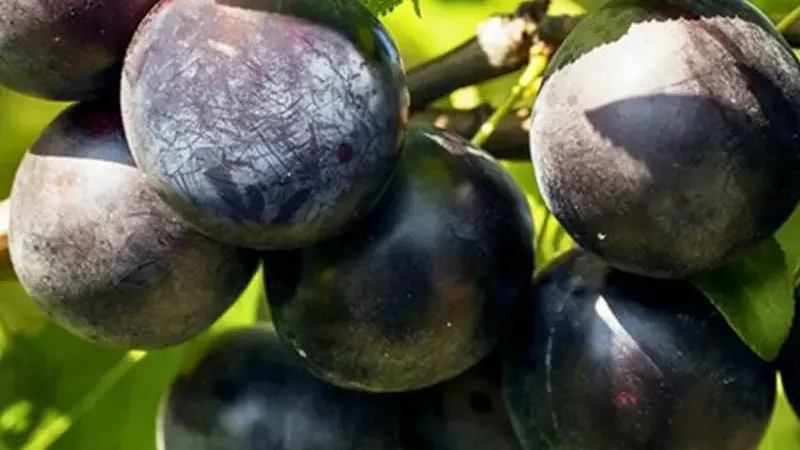
When we admire a heavily bearing European plum tree (Prunus domestica L.), our attention naturally turns to the crown full of dark blue fruits. However, the true hero of this fruit-growing success hides in the dark, beneath the soil surface. It is the rootstock – the root system onto which the noble variety (scion) is grafted.
The rootstock is literally the foundation stone of the orchard; it acts as a communication bridge between the soil and the tree crown, determining the vigor of growth, the onset of bearing, fruit size, and resistance to stress factors.
The global trend in modern fruit growing is moving towards intensive cultivation technologies (HDP – High Density Planting), which require rootstocks with weak or moderate growth vigor (Czinege et al., 2012; Milošević et al., 2013). Choosing the right rootstock is a strategic decision for decades. If you make a mistake during pruning, you lose one season. If you make a mistake in choosing a rootstock, you lose the entire orchard. This article, based on the latest scientific findings, will guide you through the complex world of plum rootstocks and their impact on the agronomy of Prunus domestica.
The Dilemma of the Modern Fruit Grower: Mechanized Harvesting vs. Fresh Market
The choice of rootstock is always a compromise between market demands and harvesting technology.
As stated by Czinege et al. (2012), for example, in Hungary, 95 to 99% of plum orchards are grafted on strongly growing myrobalan seedlings. The main reason is the generally established mechanized harvesting (shakers), which requires massive, strong trees planted at wider spacings.
Fresh Market Demands
On the other hand, the fresh fruit market demands large, hand-picked fruits of high quality. These requirements are best met by relatively small trees with moderate growth vigor, which are highly productive and allow cultivation in high-density planting systems (Czinege et al., 2012).
Category 1: The Giants of the Orchards – Myrobalan (Prunus cerasifera)
Myrobalan (cherry plum) is historically the most widely used rootstock for the European plum. Its main advantage is its enormous adaptability. It is recommended for dry locations but is also often used in wet sites, where the grafts are protected from early frosts due to later vegetation (Czinege et al., 2012).
Disadvantages: Most P. domestica varieties grow vigorously to very vigorously on myrobalan, leading to a later onset of bearing. Moreover, the seedling population is genetically very heterogeneous, causing unevenness in the orchard (Czinege et al., 2012).
Clonal selection: To overcome heterogeneity, specific clones were selected. Well-known clones include 'C 162', 'C 174', or 'C 359'. The clone 'Myrobalan 29 C' (widely used in the USA and Italy) is characterized by strong growth and excellent adaptability to various soils. The 'Myrocal' clone from France is less susceptible to chlorosis and root asphyxia (suffocation) (Czinege et al., 2012).
Category 2: The Golden Mean – The Prunus domestica subsp. insititia Group
The transition to intensive orchards required rootstocks that tame the vigorous growth of noble varieties. This role is excellently fulfilled by rootstocks derived from the damson/bullace (Prunus domestica subsp. insititia). They are adapted to cooler and wetter sites (Czinege et al., 2012).
- 'St Julien A': Selected in East-Malling, England. It produces medium-sized trees that come into bearing very early. However, it is more sensitive to drought and winter frosts (Czinege et al., 2012).
- 'INRA St Julien GF 655/2': One of the most widely used rootstocks. It reduces growth vigor by about 10% compared to myrobalan. Grafts on it start bearing early, it produces almost no root suckers, and it tolerates both calcareous and dry soils well (Czinege et al., 2012).
- 'Pixy': An extremely weak-growing (dwarfing) rootstock from East-Malling. Although the trees start bearing very early, its major disadvantage is that as the tree ages, the fruit size also decreases (Czinege et al., 2012).
Category 3: Noble Roots – P. domestica ssp. domestica Rootstocks
Using the European plum itself as a rootstock for other European plum varieties is very popular in some countries. These rootstocks are valued for their excellent affinity (compatibility) and positive impact on fruit quality.
- 'Wangenheim' (Wangenheim's Early Plum): An old German variety propagated generatively (by seeds). It produces medium-strong to semi-dwarfing trees. The grafts bear early, are productive, and show excellent cold tolerance (Czinege et al., 2012).
- 'Wavit': This is a modern, vegetatively propagated clone selected from 'Wangenheim' seedlings in Austria. It combines the advantages of the original variety with absolute stand uniformity. Trees on 'Wavit' bear early and abundantly, and the fruits are larger and ripen slightly earlier (Czinege et al., 2012).
- 'Belošljiva': An autochthonous (indigenous) Serbian rootstock. A study conducted by Milošević et al. (2013) showed that this rootstock induces relatively strong growth. When evaluated in a high-density planting (HDP) system, trees on 'Belošljiva' achieved a large trunk cross-sectional area (TCSA), which in some varieties (e.g., 'Čačanska Najbolja') led to lower specific yield efficiency (YE).
Category 4: Modern Interspecific Hybrids and Extreme Dwarfs
Scientific research is constantly looking for the ideal rootstock by crossing different species of the Prunus genus to achieve maximum growth reduction without losing fruit size.
- 'Krymsk 1' (VVA-1): A Russian hybrid (P. tomentosa x P. cerasifera). It is one of the most dwarfing rootstocks today, reducing tree size by 40 to 50% compared to standards. It is ideal for super-intensive orchards with high planting density, but it requires irrigation in dry locations (Czinege et al., 2012).
- 'Ishtara': A French hybrid of myrobalan and Japanese plum. It acts as a semi-dwarfing rootstock (weaker than myrobalan). However, on wet soils, it is at risk of root asphyxia (Czinege et al., 2012).
Agronomic Impact: Vigor vs. Yield Efficiency (YE)
The choice of rootstock directly affects the agronomic parameters that determine the economics of the orchard. Milošević et al. (2013) emphasize in their study the relationship between growth vigor (expressed as trunk cross-sectional area - TCSA) and yield efficiency (YE, expressed in kg of fruit per cm² of trunk).
Strongly growing rootstocks (like myrobalan or 'Belošljiva') build enormous wood mass. This means that the tree invests energy into the growth of branches and the trunk at the expense of early fruit formation.
Conversely, weak-growing and semi-dwarfing rootstocks (like 'St Julien A', 'Wavit', or 'Krymsk 1') force the noble Prunus domestica variety to invest assimilates directly into generative organs (flowers and fruits). The result is high yield efficiency (YE) already in the first years after planting, allowing a faster return on investment in a modern HDP orchard (Milošević et al., 2013).
Conclusion
The union of a noble European plum variety and its rootstock is literally an agronomic marriage for life. As scientific studies clearly prove (Czinege et al., 2012; Milošević et al., 2013), there is no single "universally best" rootstock.
If you are planning an extensive orchard intended for mechanized shaker harvesting, strongly growing myrobalan clones remain the logical choice. However, if your goal is a modern, intensive orchard with high planting density, focused on producing large, premium fruits for the fresh market, your attention should turn to semi-dwarfing and dwarfing rootstocks or modern hybrids. The right choice of this invisible architect underground is the most important step towards a rich and stable harvest above it.
Choose the best plum varieties for your orchard
View our offer of premium plums ➤
Interested in the science behind fruit growing and rootstock selection?
Join our community and discuss with experts.
Join the VIP Facebook group HERE ➤