



































































The Mystery of Peach Softening: The Molecular Symphony of Ripening
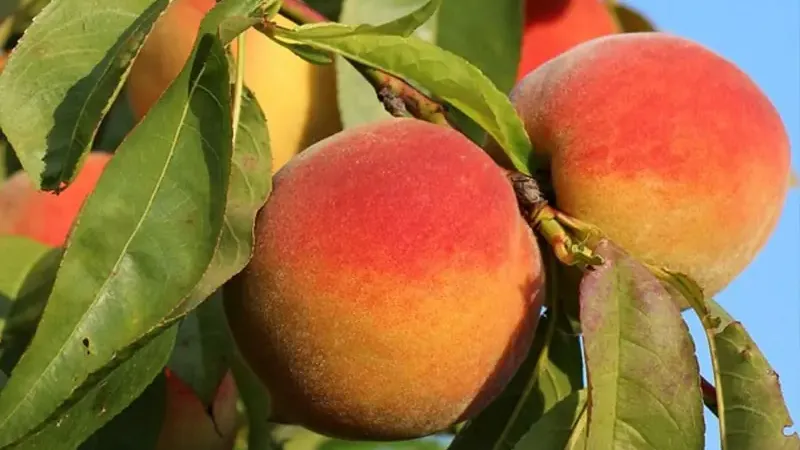
The Mystery of Peach Softening: The Invisible Molecular Symphony That Turns Stone into Sweet Juice
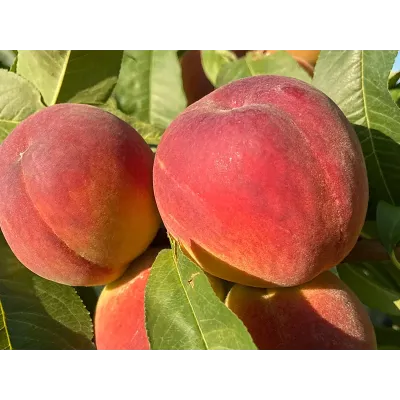
You buy a beautiful, firm peach in the store. It is hard as a rock, ideal for carrying in a bag. You leave it on the kitchen counter for two days, and a miracle happens – the hard sphere turns into a soft, yielding fruit, dripping with sweet, sticky juice with every bite.
This process, which we take completely for granted, is actually one of the most complex biochemical performances in the plant kingdom. What exactly happens inside the peach during these critical hours? What invisible forces break down its solid structure and turn it into a culinary delight? Let's dive into the microscopic world of cell walls, enzymes, and hormones, and uncover the mystery of peach softening.
Ethylene: The Invisible Conductor of Ripening
The peach (Prunus persica) belongs to the group of so-called climacteric fruits (Cao et al., 2025). This means that its life does not end when it is picked from the tree. On the contrary, harvesting triggers a dramatic physiological change.
The key player in this process is ethylene (C₂H₄), a simple gaseous plant hormone. In the unripe fruit, its production is minimal. However, as soon as the peach reaches a certain degree of maturity (or is picked), ethylene production increases exponentially – the so-called ethylene peak (climacteric) occurs (Cao et al., 2025).
Simultaneously, the respiration rate of the fruit increases sharply. These two processes are closely linked and together start a cascade of changes that lead to the ripening and subsequent aging (senescence) of the fruit (Cao et al., 2025).
The Main Switch
Ethylene acts as the main switch. It activates the expression of hundreds of genes that were previously "dormant." Among them are genes encoding enzymes whose sole task is to break down the firm structure of the fruit.
The Cell Wall Under Fire: How the Fortress Collapses
The texture of a peach is primarily determined by the strength of its cell walls. The plant cell wall is a complex, three-dimensional network made of cellulose microfibrils, which are enveloped and cross-linked by a matrix of hemicelluloses and pectins (Cao et al., 2025). Pectins act as a kind of biological glue that holds the cells together.
When ethylene signals the attack, peach cells begin to produce specific cell wall degradation enzymes in large quantities. The most important ones include (Cao et al., 2025):
- Pectin methylesterase (PME): Prepares pectins for further breakdown.
- Polygalacturonase (PG): This is the main "demolition" enzyme. It cleaves long chains of pectins into smaller fragments, causing the cell wall to loosen and the fruit to soften.
- β-galactosidase (β-Gal) and cellulase (Cx): Further disrupt the structure of hemicelluloses and cellulose.
The result of this enzymatic activity is that the firm gel matrix of pectins disintegrates, the cells lose their cohesion, and the fruit becomes soft and juicy (Cao et al., 2025).
The Genetics of Texture: Why Do Some Peaches Not Melt?
Interestingly, not all peaches soften in the same way. From a genetic perspective, we distinguish three basic types of flesh texture (Bassi et al., 2016; Bielenberg et al., 2009):
1. Melting flesh (M)
These are the classic peaches intended for fresh consumption. Their flesh becomes extremely soft at full maturity and literally melts on the tongue. This process is accompanied by high activity of the enzyme polygalacturonase (PG) (Bielenberg et al., 2009).
2. Non-melting flesh (m)
These peaches (often used in the canning industry) do soften, but they never reach the "melting" stage. Their flesh remains firm and slightly rubbery even when overripe. Scientists have found that these varieties lack a key part of the gene for the endo-PG enzyme, so they cannot break down pectins completely (Bielenberg et al., 2009).
3. Stony hard (hd)
These unique peaches (especially popular in Asia) remain extremely firm and crisp even when they are fully ripe and sweet. The reason is that they produce very little ethylene, so the softening process hardly starts at all (Bielenberg et al., 2009).
N-glycosylation: A New Piece in the Softening Puzzle
For a long time, it was assumed that softening was exclusively a matter of ethylene and cell wall-degrading enzymes. However, recent research has revealed another, highly sophisticated level of regulation – protein N-glycosylation (Wang et al., 2021).
N-glycosylation is a process in which complex carbohydrate chains (glycans) are "attached" to newly formed proteins (including enzymes) in the cell. These carbohydrate "tags" are crucial for the proper functioning, stability, and localization of proteins within the cell (Wang et al., 2021).
Scientists have found that during the ripening of melting peaches, dramatic changes occur in the structure of these N-glycans. Specifically, the activity of an enzyme called β-N-acetylhexosaminidase (β-Hex) rises sharply (Wang et al., 2021). This enzyme acts as "scissors" that cut off specific carbohydrate residues (terminal GlcNAc) from the N-glycans attached to proteins.
Why is this important? Research suggests two possible hypotheses (Wang et al., 2021):
- Specific, "trimmed" N-glycans may act as internal signaling molecules (hormones) that directly trigger the ripening process.
- The alteration of carbohydrate chains on glycoproteins in the cell wall can directly affect their solubility and structure, leading to a decrease in fruit firmness.
Proof of the importance of this process is the fact that if the activity of the β-Hex enzyme is artificially blocked (for example, by a specific inhibitor), ethylene production drops, and the peach softening process slows down significantly (Wang et al., 2021).
A Race Against Time: Why is Softening a Problem?
For the consumer, a soft peach is a culinary peak. For growers and retailers, however, it is a nightmare. Melting peach varieties have an extremely short shelf life after harvest – often only 5 to 7 days at room temperature (Wang et al., 2021). Rapid softening makes them susceptible to mechanical damage during transport and drastically increases the risk of infection by pathogens (e.g., brown rot - Monilinia fructicola), leading to huge economic losses (Cao et al., 2025).
Therefore, enormous research efforts are devoted to finding ways to slow down this process. Cooling is the most common method, but peaches are sensitive to chilling injury, which leads to internal browning and a loss of juiciness (mealiness) (Cao et al., 2025).
Scientists are therefore experimenting with various innovative technologies:
- 1-MCP (1-methylcyclopropene): A gas that blocks ethylene receptors in the fruit, thereby "blinding" the peach to its own ethylene and significantly slowing down softening (Cao et al., 2025).
- Signaling molecules (NO, H₂S): The application of nitric oxide or hydrogen sulfide can inhibit cell wall-degrading enzymes and extend shelf life (Cao et al., 2025).
- Plant hormones (Salicylic acid, Melatonin): These substances can increase the antioxidant capacity of the fruit and protect cell membranes from degradation (Cao et al., 2025).
Conclusion
Peach softening is a highly organized, genetically and hormonally controlled symphony in which ethylene sets the tempo, enzymes break down cell walls, and complex carbohydrate chains (N-glycans) act as fine-tuning mechanisms. Understanding this complex dance of molecules is the key to extending the shelf life of this delicious fruit, reducing huge losses in the food chain, and ensuring that we can enjoy a perfect, juicy peach not only in the orchard but also thousands of miles away.
Grow your own sweet and juicy peaches
View our offer of premium peach varieties ➤
Interested in the science behind fruit growing and ripening?
Join our community and discuss with experts.
Join the VIP Facebook group HERE ➤