

































Non-Staining Mulberries: Modern Cultivars That Keep Paving Clean
No More Stained Paving or Ruined Shoes
Discover the modern mulberry cultivars that leave no mess behind
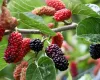
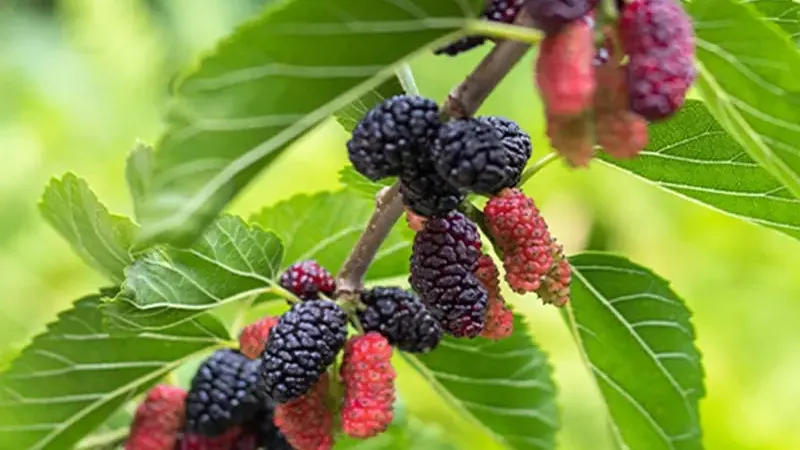
Do you remember that childhood feeling? The sweet taste of fresh mulberries picked straight from the tree was unbeatable. For many owners of modern gardens, however, that memory comes with one serious worry: purple stains on paving, dyed hands, ruined clothes and a sticky mess under the tree. Ordinary mulberry cultivars are notoriously delicate – the fruit crushes or drops at the slightest touch.
Thanks to the work of plant breeders and the discovery of exotic cultivars, things are different today. You can enjoy this luxurious fruit right above your patio without a single stain. If the fear of a messy surface has kept you from planting a mulberry, it is time to put that myth aside. The cultivars below were bred or selected to solve two specific problems: premature fruit drop and the staining of surfaces.
|
22 °Brix
sugar content of Shandong
|
12 cm
fruit length of Pakistan White
|
−25 °C
hardiness of Galicia and Shelli
|
6
cultivars for a clean harvest
|
← Swipe the table sideways →
These cultivars fall into two groups: those without dark pigment, and those with exceptionally firm flesh.
1. Invisible sweetness: cultivars with no dark pigment
The simplest way to avoid stains is to choose cultivars that contain no dark pigment at all. These trees can be planted next to light paving, paths or even children's play areas without any concern.
| Sugar content of Shandong | 22 °Brix |
| low sugar content | high sugar content (better) |
The value is shown against a range of 0 to 25 °Brix, which covers the usual sugar range of sweet mulberries.
2. The firm revolution: dark cultivars that neither drop nor bleed
What if you love the typical flavour and antioxidant power of dark mulberries but do not want a sticky carpet under the tree? Breeders in Eastern Europe and Asia have answered with cultivars whose flesh is exceptionally firm. The fruit holds on the shoots until full ripeness and does not squash in your hand during picking.
Fruit size compared
Fruit length affects not only the look of the crop but also picking speed – long-fruited cultivars fill a basket considerably faster.
| Pakistan White | 10–12 cm |
| Pakistan Red | 8 cm |
| Galicia and Shelli | 5–5.5 cm |
| Agate | 5 cm |
| Shandong | 4–4.5 cm |
← Swipe sideways →
The bars are shown against a range of 0 to 12 cm; the maximum corresponds to the longest fruit of Pakistan White.
All cultivars at a glance
| Cultivar | Fruit colour | Size | Hardiness | Main strength |
|---|---|---|---|---|
| Shandong | milky white | 4–4.5 cm | not stated | highest sugar content, best for drying |
| Pakistan White | creamy white to pale yellow | 10–12 cm | to −15 °C | longest fruit, honey nectar flavour |
| Agate | dark purple to black | 5 cm | high (exact figure not stated) | firm fruit, keeps for several days |
| Pakistan Red | dark red | up to 8 cm | not stated | juice does not run when picked, seedless |
| Galicia | black | 5–5.5 cm | to −25 °C | holds texture when frozen or dried |
| Shelli | glossy black | 5–5.5 cm | to −25 °C | appearance and firmness after picking |
← Swipe the table sideways →
Why this fruit has no seeds
All of the cultivars above are parthenocarpic – they set fruit without pollination and are therefore seedless, or contain only tiny soft embryos. You need no pollinator for a crop, and you will find no hard pips in the flesh.
What to watch out for with Himalayan cultivars
Pakistan White tolerates frost only down to −15 °C, so in most inland Central European locations it should be grown in a container and moved into a bright, frost-free room for winter. If you want a hardy tree for open ground, choose Galicia, Shelli or Agate instead.
Where to plant which cultivar
| No restrictions: the white cultivars Shandong and Pakistan White beside light paving, a patio, a path or a play area – their juice contains no dark pigment. | |
| With some care: the firm-fruited dark cultivars Agate, Pakistan Red, Galicia and Shelli near hard surfaces – the fruit does not drop early, but it should be picked once fully ripe. | |
| Not suitable: ordinary seedlings and old dark cultivars with soft flesh above paving, seating or a parking space – the fruit drops and stains the surface. |
The mulberry did not disappear from our gardens because it stopped tasting good. It disappeared because its fruit could not cope with the demands of tidy patios. Cultivars with firm flesh and no dark pigment remove that conflict.
Pruning as a condition of a clean harvest
For maximum cleanliness in the garden and easy picking, these cultivars benefit from formative pruning in spring, and Himalayan cultivars from thinning pruning in late September. Pruning keeps the crown at a compact height, puts the fruit within arm's reach and lets you pick straight from the shoot into the basket – with no losses and no fruit trodden into the paving.
Conclusion
A mulberry in your garden no longer has to threaten your paving or your children's clean clothes. Choose the right cultivar – whether the invisible sweetness of the white Shandong and Pakistan White, or the firm dark fruit of Agate, Pakistan Red, Galicia and Shelli – and you gain an elegant, long-lived tree with real ornamental value. It is time to bring this exceptional fruit back into modern gardens. No compromises and no stains.
|
Non-staining mulberries from our nursery
The white cultivars Shandong and Pakistan White alongside the firm-fruited dark Agate, Pakistan Red, Galicia and Shelli. Pick a tree you can plant right beside the patio and enjoy sweet fruit without a single stain on the paving. Browse mulberry cultivars |
Join fellow fruit growers on Facebook
Share your growing experience, ask about cultivars and show off your harvest on our Facebook page full of keen fruit growers, talk to specialists and be the first to read new articles. Visit our page |
← Swipe sideways →