

































Cherry Plum (Prunus cerasifera): Hidden Treasure of Our Orchards and Forests
Hidden Treasure of Our Orchards and Forests
The World of the Cherry Plum (Prunus cerasifera)
The Unassuming Hero of the Orchard
You may know it under folk names such as myrobalan, or the sturdy, thorny shrub that is the first to burst into clouds of white blossom along roadsides and forest edges each spring. The cherry plum (Prunus cerasifera Ehrh.) is often dismissed as a mere rootstock for more refined varieties, or even as a weedy shrub. Scientific research from around the world, however, reveals a very different picture. This species is a vast reservoir of genetic diversity, a master of survival under extreme conditions, and it played a key evolutionary role in the origin of fruit we commonly eat today.
Did you know? Although the cherry plum is sometimes colloquially called a "mirabelle," this is botanically incorrect. The true mirabelle is a cultivar group within the European plum (Prunus domestica), while Prunus cerasifera is a distinct species with its own taxonomic history and a key role in the evolution of stone fruit.
Taxonomy, Origin and Genetic Background
The cherry plum belongs to the rich rose family (Rosaceae), the genus Prunus, and the section Euprunus. Its native range covers south-eastern Europe – the Balkan Peninsula and Crimea – as well as western to central Asia, including the Caucasus, Iran and Iraq. Thanks to its exceptional adaptability, it has naturalised across temperate zones worldwide. In some regions, such as Australia and New Zealand, it is even classified as an invasive species.
Genetically, it is a diploid species with a chromosome number of 2n = 2x = 16. The exception is the subspecies Prunus cerasifera subsp. caspica, which has a hexaploid genome level, also reflected morphologically in larger leaves, flowers and longer stalks.
|
3–10 m
Shrub / tree height
|
2.5–7 m
Crown diameter
|
11–35 cm
Trunk diameter (5–25 years)
|
2n = 16
Chromosome number
|
← Swipe the table sideways →
In scientific circles, the myrobalan is referred to as a "genetic bridge" within the genus Prunus. Thanks to its broad interspecific compatibility and high hybridisation potential, it is one of the parent species of the hexaploid European plum, and its deliberate crossing with the Japanese plum (Prunus salicina) gave rise to a new, commercially valuable species – the Russian plum (Prunus × rossica).— Eremin, 2020; Ternjak et al., 2026
Morphological Characteristics
Prunus cerasifera grows as a deciduous shrub or small tree with a densely branched, upright habit. Its overall structure and individual organs reveal a species perfectly adapted to survive in demanding conditions.
Phenology and Resilience to Climate Change
The myrobalan is characterised by a very short winter dormancy period, causing its flowers to break bud exceptionally early. Long-term phenological studies – such as a seventeen-year study carried out in Belgrade – show that this species responds with remarkable sensitivity to climate warming. The onset of flowering has shifted, on average, 15 days earlier, while the overall flowering period has lengthened. Despite this earlier onset of flowering, the myrobalan retains excellent resistance to late spring frosts, allowing it to maintain stable, high yields even in years with temperature anomalies.
This combination – early flowering paired with high flower frost hardiness – makes the cherry plum a valuable genetic resource for breeding stone-fruit varieties resistant to spring frosts, one of the greatest risks facing modern fruit growing.
Fruit and Seeds: An Explosion of Colour and Shape
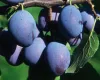
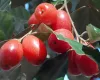
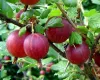
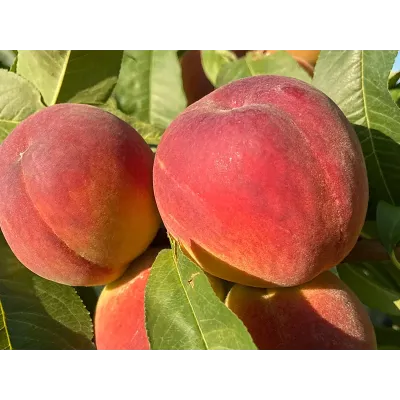
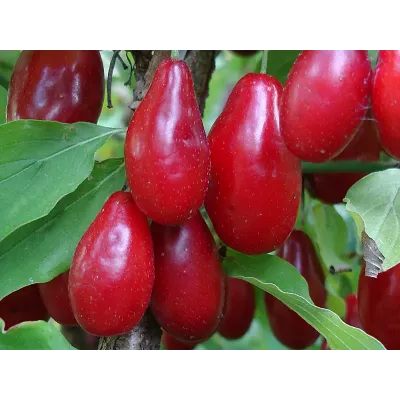
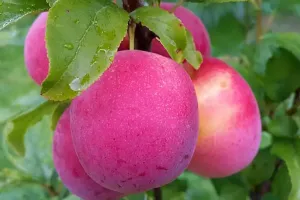
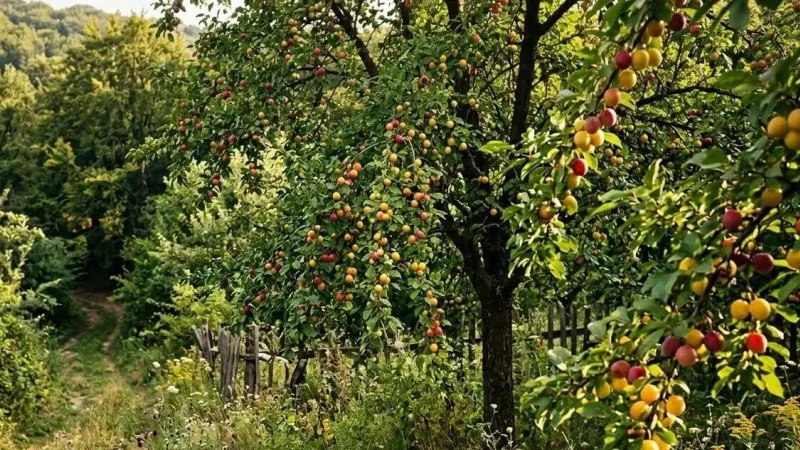
The fruit of the myrobalan is a drupe, usually spherical, though sometimes elliptical or pear-shaped. Skin colour is extremely varied – from yellow and orange through bright red to blue, purple and almost black. The flesh is juicy, sweet to sweet-sour, ranging in colour from greenish through yellow and orange to blood red. The stone is usually elliptical and generally clings firmly to the flesh, although free-stone forms also exist.
An interesting feature is the composition of the waxy layer on the fruit's surface, which is rich in triterpenoids – mainly ursolic and oleanolic acid – and aliphatic compounds. This layer forms a natural protective barrier against water loss and outside influences. Wild populations produce fruit weighing between 5.6 and 15.4 grams, while in cultivated selections, such as the Sicilian selection 'Alimena', a single fruit can weigh more than 41 grams.
Comparing Fruit Weight
| Wild populations – smallest fruit | 5.6 g |
| Wild populations – largest fruit | 15.4 g |
| Cultivated selection 'Alimena' | 41 g |
Values are shown against an indicative range of 0–45 g, corresponding to the weight of large-fruited stone-fruit cultivars.
← Swipe sideways →
Ecology, Adaptability and Intraspecific Classification
Prunus cerasifera is an undemanding and remarkably resilient species. It thrives across a wide range of soil types – from gravelly and sandy soils to heavy, calcareous soils poor in nutrients. Research from Crimea confirms that the species also tolerates soils with high carbonate content and their alkalisation well.
The species shows high resistance to drought, frost and wind. Thanks to its natural resistance to many diseases and pests – including nematodes, soil pathogens and phytoplasmas – it generally requires no chemical protection. These traits make it not only a sought-after rootstock for other stone fruits (plums, apricots, peaches) but also a valuable resource for organic farming and urban greenery.
In nature, the myrobalan forms an important part of forest communities. It grows along forest edges, forms thickets and provides food and shelter for insects, rodents and nesting birds. Its seeds are dispersed mainly through endozoochory – that is, via animals' digestive tracts – with large ungulates such as deer, roe deer and even bison contributing to their long-distance dispersal.
A note of caution: Despite its many benefits, it should be noted that outside its native range the cherry plum behaves invasively in some regions – for example in Australia and New Zealand – displacing native vegetation. When planting outside its natural range, it is therefore advisable to consider local guidance and manage its spread.
Owing to the species' huge intraspecific variability, Eremin (2020) proposed a classification dividing P. cerasifera into three main subspecies:
| Subspecies | Characteristics |
| subsp. cerasifera | The typical (nominate) myrobalan |
| subsp. orientalis | The eastern myrobalan |
| subsp. macrocarpa | The large-fruited myrobalan; includes the varieties macrocarpa, georgica, iranica, nairica, pissardii and taurica |
← Swipe the table sideways →
Conclusion
The cherry plum (Prunus cerasifera) is a species that combines enormous genetic plasticity, unyielding resistance to adverse environmental conditions, and the ability to adapt quickly to a changing climate. From wild valleys in the Caucasus, through European forests, to the streets of modern cities, the myrobalan proves its remarkable vitality time and again. At a time when global agriculture faces the challenges of climate change and the erosion of genetic diversity, wild populations of this species represent an invaluable gene bank. Whether as a foundation for breeding new, hardier varieties, or as a stabilising element of urban and rural greenery, the myrobalan deserves far more horticultural and scientific attention than it has received to date.
Stone Fruit Varieties from Our ShopLooking for hardy, proven varieties of plums, apricots or other stone fruits for your garden? Our shop offers carefully selected, ready-to-plant trees, including varieties grafted onto exceptionally resilient rootstocks. Browse our varieties |
Join Us on FacebookShare your growing experience, ask about varieties and share your harvest on our Facebook page full of enthusiastic fruit growers, chat with experts, and get access to new articles first. Visit our page |