

































Rescue from the East: How Asian Genes and Hybrids Saved Chestnuts
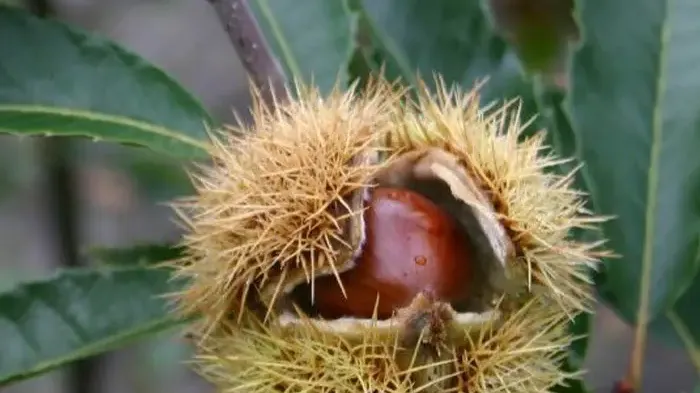
Rescue from the East
How Asian genes and European-Japanese hybrids saved majestic chestnuts from ruin
Imagine a tree that fed entire generations for centuries suddenly vanishing from the landscape. The sweet chestnut (Castanea sativa), long revered as the “bread tree”, faced exactly this kind of catastrophe at the turn of the 19th and 20th centuries. European orchards began dying relentlessly under the onslaught of two devastating fungal diseases, against which native trees had no defence. Just as it seemed traditional chestnut groves would fade into memory, scientists and breeders turned their gaze to the Far East. This is the story of interspecific hybridisation – the story of how combining European quality with Asian resistance rescued chestnut growing in Europe.
Two mortal blows to European orchards
The decline of European chestnuts began in the late 19th century with the arrival of ink disease, caused by the soil-borne oomycetes Phytophthora cinnamomi and Phytophthora cambivora. This pathogen attacks the root system and root collar, leading to rapid tree death. The consequences were catastrophic – in France, chestnut forest area shrank from 450,000 hectares in 1841 to a mere 32,000 hectares by 1975 as a result of the disease and competition from other tree species (Bruneton, 1984).
As if that were not enough, a second calamity was first observed in Genoa, Italy, in 1938 – chestnut blight, caused by the fungus Cryphonectria parasitica (formerly Endothia parasitica). This disease, which had already almost wiped out the American chestnut (C. dentata) in North America, spread rapidly across Europe as well. The fungus penetrates the bark, destroys the cambium and forms cankers that literally strangle the tree (Anagnostakis, 1987; Heiniger and Rigling, 1994). The European chestnut (C. sativa) proved highly susceptible to both pathogens.
| Disease | Causal agent | First observed | Effect on the tree |
|---|---|---|---|
| Ink disease | Phytophthora cinnamomi, P. cambivora | late 19th century | root and root-collar rot, rapid death |
| Chestnut blight | Cryphonectria parasitica | 1938, Genoa (Italy) | bark cankers, girdling of the tree |
← Swipe the table sideways →
|
450,000 ha
chestnut forest in France, 1841
|
32,000 ha
the same area by 1975
|
≈ 93%
total decline in orchard area
|
500 m a.s.l.
recommended upper altitude limit for hybrid plantings
|
← Swipe the table sideways →
Asian rescuers and their shortcomings
The solution to this existential threat was found in Asia. The Japanese chestnut (Castanea crenata) and the Chinese chestnut (Castanea mollissima) had evolved alongside these very pathogens and consequently developed natural genetic resistance to them. From the early 20th century, between 1917 and 1940, seedlings of these Asian species were imported into Europe on a large scale to replace the dying native trees (Elorrieta, 1949; Fernandez et al., 1993). It soon became clear, however, that although the Asian species were disease-resistant, they were in many respects inferior for European growing conditions and markets.
Bringing two worlds together: the birth of interspecific hybrids
Interspecific hybridisation became the way out of the crisis. Breeders aimed to create trees that would inherit disease resistance from Asian parents (C. crenata or C. mollissima) while retaining the excellent fruit quality, majestic growth habit and later budbreak of the European chestnut (C. sativa).
The first systematic crosses in Europe began as early as the 1920s. In Spain, the work was started by Gallastegui (1926) and later continued by Urquijo (1944, 1957). In Portugal, Bernardino Barros Gomes carried out the first interspecific crosses in 1947, using pollen from the Japanese cultivar ‘Tamba’ as the male parent (Gomes Guerreiro, 1948, 1957).
The greatest commercial success was achieved by the French breeding programme at INRA in Bordeaux. In 1952, Schad and his colleagues began an extensive selection of interspecific hybrids (C. sativa × C. crenata) resistant to ink disease – a programme later continued by researchers Salesses and Chapa, which produced the hybrid cultivars and rootstocks still most widely used today.
Star hybrids: Bouche de Bétizac, Marigoule and Marsol
Decades of painstaking breeding work have produced the hybrids that today form the backbone of modern chestnut orchards in Europe.
| Nut size – Bouche de Bétizac | 15–18 nuts/kg |
| fewer nuts/kg – larger fruit | more nuts/kg – smaller fruit |
Value shown against the typical size range for chestnuts (roughly 10–40 nuts/kg). ← Swipe sideways →
Not all that glitters is gold: the challenges of hybrids
While hybrids saved European production, they also brought new agronomic challenges.
Graft incompatibility. Many traditional European cultivars fail to grow long-term on hybrid rootstocks. So-called delayed incompatibility is common: the graft takes and the tree grows for several years, but at the start of the third or fourth year the scion (the European cultivar) suddenly dies while the hybrid rootstock remains alive (Pereira-Lorenzo and Fernandez-Lopez, 1997a).
Early budbreak and frost risk. Interspecific hybrids have retained the trait of early budbreak from their Asian ancestors. While pure European cultivars break bud late and thus avoid spring frosts, hybrids (such as ‘Précoce Migoule’) wake up as early as March. For this reason, France and Spain recommend planting hybrids only below 500 m above sea level, where the risk of late spring frost is minimal (Breisch, 1995).
Conclusion
The story of chestnut crossbreeding is a striking example of how science and international cooperation can rescue precious agricultural heritage. The Asian species Castanea crenata and Castanea mollissima supplied critical resistance genes at a time when the European chestnut was under threat of extinction. Today, after more than a century of breeding work, European-Japanese hybrids such as ‘Bouche de Bétizac’ and ‘Marsol’ form the cornerstone of new, modern and resilient orchards. While traditional, pure European varieties remain irreplaceable for their distinctive flavour and timber quality in mountain regions, it is the hybrids that have ensured the majestic “bread tree” has not only a glorious past, but also a secure future.
Choose resilient chestnuts for your own gardenIn our online shop you will find carefully selected chestnut cultivars and rootstocks, proven for growing in local conditions. Get inspired and plant a piece of this centuries-old history in your own garden. Browse chestnut varieties |
Join fellow fruit-growing enthusiastsShare your growing experience, ask about varieties and share your harvest with our Facebook community of passionate fruit growers, discuss with experts and get access to new articles first. Visit our Facebook page |