




































Why Homemade Apricot Jam with Butter Is a Scientific Recipe for Health
Sweet Alchemy in a Jar: Why Homemade Apricot Jam with Butter Is a Scientific Recipe for Health
How heat from the pot and fat from butter unlock the carotenoids hidden in fruit
The smell of apricots or peaches bubbling away in a pot is, for many of us, an inseparable symbol of summer and of getting ready for winter. In an age that often glorifies raw food above all else, cooking jams and preserves is regarded by many with suspicion. The prevailing view is that long cooking and added sugar strip the fruit of all its nutritional value.
Food science, however, reveals a paradox. While some vitamins genuinely suffer from heat, there is a group of precious compounds – a so-called "orange miracle" – for which time in a hot pot, followed by pairing with fat on a slice of bread, is actually the best possible way to deliver maximum health benefits to our bodies. This article walks through the scientific background of homemade jam-making and explains why you should spread your favourite apricot jam over a generous layer of butter.
Carotenoids: The Orange Guardians of Our Health
The secret behind the vibrant colour of apricots, peaches, and even exotic mangoes or citrus fruits lies in carotenoids. These are yellow, orange to red plant pigments that occur widely throughout the plant kingdom (Ruiz-Rodriguez et al., 2008). This family includes well-known compounds such as beta-carotene, lycopene, lutein and beta-cryptoxanthin.
From a human health perspective, these compounds are extremely valuable. They act as powerful antioxidants that protect cells from oxidative damage, support the immune system, play a key role in eye protection, and reduce the risk of cardiovascular disease and certain cancers (Muzamail et al., 2025; Anih et al., 2025). Beta-carotene also functions in the body as provitamin A, which the organism can convert into vitamin A – essential for healthy cell growth and good eyesight (Singh et al., 2023).
|
4
main carotenoids mentioned in the text
|
~50%
of original compounds remain in the finished jam
|
4
fat-soluble vitamins (A, D, E, K)
|
1:1–2:1
typical sugar-to-fruit ratio when cooking jam
|
Why Does Heat Help When Cooking Jam?
If you eat a raw apricot, your body absorbs only a fraction of the carotenoids it contains. The reason lies in plant cell biology – in raw fruit, carotenoids are tightly bound within chromoplasts and surrounded by a complex matrix of fibre and pectin. Our digestive tract is not always powerful enough to fully break down these structures.
This is where the magic of thermal processing comes in. Scientific studies confirm that heat treatment, such as cooking fruit for jams and preserves, disrupts cell walls and breaks down food structures. This disruption leads to markedly higher chemical extractability and, consequently, increased bioavailability of carotenoids for the human body (Ruiz-Rodriguez et al., 2008). Put simply: heat in the pot "unlocks" the cells and releases the orange pigments so that our intestines can absorb them easily.
Scientific fact: Although carotenoids are sensitive to light and oxygen, their breakdown from heat is considerably lower compared with other plant pigments, such as chlorophyll, or with the extremely heat-sensitive vitamin C (Ruiz-Rodriguez et al., 2008; Singh et al., 2023).
Ideal Candidates for the Pot: Apricots, Peaches and Mango
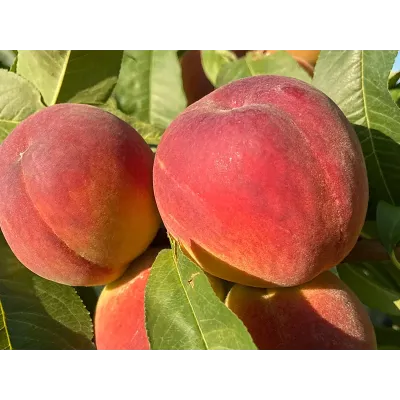
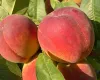
This favourable effect of thermal processing applies mainly to fruit with a high carotenoid content. In our region, these are primarily apricots and peaches, though the effect works well for more exotic fruits too.
| Carotenoid | Mentioned Source in This Article |
|---|---|
| Beta-carotene | Apricots, peaches, mango |
| Lutein | Mango |
| Beta-cryptoxanthin | Citrus fruits, e.g. oranges |
← Swipe the table sideways →
The Golden Rule: It Doesn't Work Without Fat
Releasing carotenoids through cooking is only half the job. For the body to actually absorb and use them, it needs a carrier – and that carrier is fat.
Carotenoids, including provitamin A, belong to a group of fat-soluble (lipophilic) compounds. Unlike vitamin C or B-complex vitamins, which are water-soluble, they are not efficiently absorbed in the watery environment of the digestive tract. Research clearly shows that the bioavailability of provitamin A can be significantly increased by the presence of dietary fat, which facilitates its absorption and conversion into active vitamin A (Sahu et al., 2024; Gupta & Kumari, 2025). Fat-soluble vitamins – A, D, E and K – are absorbed by the body far more easily in the presence of fat (Singh et al., 2023).
Practical takeaway: Jam made purely from fruit and sugar contains almost no fat. If you were to eat it straight from the spoon, a large portion of the released carotenoids would simply pass through your body without being used.
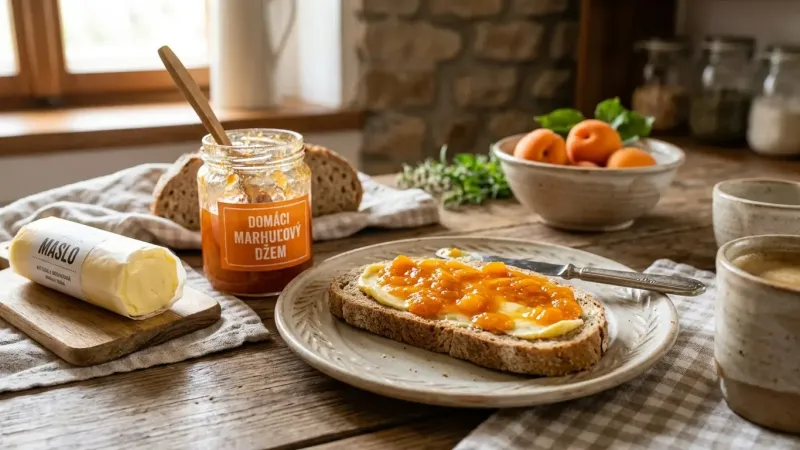
This is why the traditional way of eating it – a slice of bread spread with a generous layer of butter, topped with homemade apricot jam – is, scientifically speaking, an almost perfect combination. The fat from butter, or from plant-based margarine if you prefer, creates an environment in the digestive tract where the carotenoids from the jam dissolve and safely cross the intestinal wall into the bloodstream.
Sometimes our grandmothers' traditional cooking holds a deeper scientific logic than we might assume at first glance.
Beware the "Dilution Effect"
To be scientifically precise, one less favourable aspect of jam-making should also be mentioned. Although the bioavailability of carotenoids increases with cooking, their absolute concentration per 100 grams of finished product may be lower than in 100 grams of fresh fruit.
Caution: This phenomenon is called the dilution effect. When jam is made, a large amount of sugar is added to the fruit purée – often at a ratio of 1:1 to 2:1 – which naturally reduces the proportion of original fruit mass in the final product. Studies examining mineral and other nutrient content in apple, peach and apricot jams confirm that the finished product contains only about 50% of the original compounds present in the raw purée, purely as a result of dilution by added sugar (Alshallash et al., 2023).
| Fresh fruit (reference value) | 100% |
| Finished jam (after adding sugar) | ~50% |
Values reflect the proportion of original compounds from the raw fruit purée that remain in 100 g of the finished product (Alshallash et al., 2023).
← Swipe sideways →
Jam therefore serves as an excellent, highly absorbable source of antioxidants, but given its high added-sugar content, it should not be their sole source.
Conclusion
Turning fruit into homemade jams and preserves is not just a way to sweeten winter mornings. It is a textbook example of how heat treatment can change the structure of food in our favour. Cooking apricots or peaches breaks open their cellular "prison" and releases valuable carotenoids.
Next time you spread homemade apricot jam on buttered bread, there is no need to feel guilty about eating "empty calories." Quite the opposite – thanks to the heat from the pot and the fat from the butter, you are giving your body a highly usable dose of antioxidants and provitamin A that would be very hard to obtain from raw apricots alone. Sometimes traditional home cooking really does carry a deeper scientific logic than we might expect at first glance.
|
Discover Our Apricot and Peach Varieties Choose from carefully selected apricot and peach varieties, perfect for making fragrant homemade jams packed with carotenoids. Find your favourite in our online shop. View Varieties |
Join Fellow Fruit Enthusiasts Share your growing experience, ask about varieties, and share your harvest in our Facebook community of passionate fruit growers. Discuss with experts and be the first to see new articles. Join the Page |