

































Peaches and Health: Protecting the Heart and Slowing Cancer Cell Growth
A Sweet Weapon Against Silent Killers: How Peaches Protect the Heart and Slow Cancer Cell Growth
What science has found about the phytochemicals hidden beneath the velvet skin
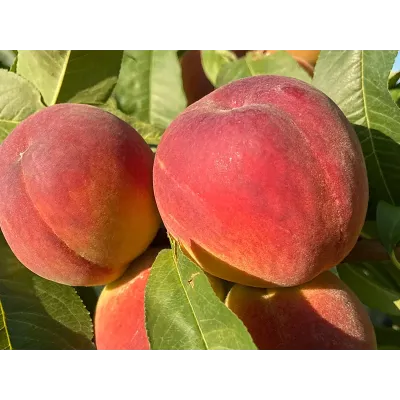
When we enjoy a juicy peach on a hot summer day, we usually think only of its flavour and the refreshment it brings. Few of us realise that we are eating one of the most complex natural shields against the two greatest threats of our time: cardiovascular disease and cancer. These so-called diseases of civilisation are often the result of long-term, invisible damage to our cells caused by oxidative stress and inflammation.
Modern science increasingly turns its attention away from synthetic drugs and back to nature, discovering that fruits such as the peach contain remarkably powerful bioactive compounds. Let us look at what scientific studies say about the real strength of peaches.
|
26
commercial peach, nectarine and plum cultivars tested
|
30–55%
inhibition of LDL cholesterol oxidation by peach extracts
|
2–3×
higher phenolic concentration in the skin than in the flesh
|
3
breast cell lines used in the antiproliferative assay
|
← Swipe the table sideways →
Phytochemicals: an invisible army in a velvet coat
To understand how ordinary fruit can act against such serious diseases, we need to look at its chemical composition. The strength of the peach (Prunus persica) lies neither in its energy value (which is low) nor in its basic vitamins (although it does contain vitamins A, C and E), but in the large amount of compounds known as phytochemicals (Bassi et al., 2016; Byrne et al., 2009).
Phytochemicals are secondary metabolites that the plant produces to protect itself against stress, UV radiation and pathogens. Once we eat them, they become effective antioxidants that neutralise free radicals (reactive oxygen species, ROS) in our body. Free radicals are the main cause of oxidative stress, which damages cells, accelerates ageing and triggers the processes leading to cancer and heart disease (Bassi et al., 2016).
The total antioxidant capacity of peaches depends almost entirely on their content of phenolic compounds and anthocyanins, while the contribution of vitamin C is negligible (Byrne et al., 2009).
Protecting the heart and blood vessels: stopping the oxidation of “bad” cholesterol
Cardiovascular disease is the leading cause of death worldwide. One of the key steps in its development is atherosclerosis, the hardening and narrowing of the arteries. The process begins when there is an excess of LDL cholesterol in the blood. LDL cholesterol itself, however, is not particularly dangerous until it undergoes oxidation (Byrne et al., 2009).
Oxidised LDL cholesterol is toxic to blood vessels. It triggers an inflammatory response in which white blood cells try to engulf the altered cholesterol, forming what are known as foam cells. These accumulate in the vessel walls, build atherosclerotic plaques, narrow the lumen of the vessel and raise the risk of heart attack or stroke (Byrne et al., 2009). Preventing the oxidation of LDL cholesterol is therefore crucial in the prevention of heart disease. And this is exactly where peaches come in.
Researchers at Texas A&M University tested extracts from 26 commercial cultivars of peaches, nectarines and plums for their ability to inhibit the oxidation of human LDL cholesterol under laboratory conditions (in vitro). The results were convincing (Byrne et al., 2009):
INHIBITION OF LDL CHOLESTEROL OXIDATION (IN VITRO)
| Peaches – upper end of range | 55% |
| Nectarines – upper end of range | 50% |
| Peaches – lower end of range | 30% |
| Nectarines – lower end of range | 0% |
Values are shown on a scale of 0–100% inhibition of human LDL cholesterol oxidation in a laboratory assay. The range reflects the differences between individual cultivars (Byrne et al., 2009).
← Swipe sideways →
Interestingly, the researchers found no direct linear relationship between total phenolic content and the degree of inhibition. The protective effect therefore does not depend only on the amount of antioxidants, but above all on their specific composition, that is, on the phenolic profile of the given cultivar (Byrne et al., 2009).
Peaches also support cardiovascular health through other routes:
| Component | Mechanism of action | Relevance for heart and vessels |
|---|---|---|
| Phenolic compounds | Neutralise free radicals and slow the oxidation of LDL cholesterol | Limit the formation of foam cells and atherosclerotic plaques |
| Vitamin K | Takes part in regulating calcium deposition in soft tissues | Helps prevent vascular calcification and arterial stiffening |
| Potassium | Maintains fluid and electrolyte balance | Contributes to the regulation of heart rhythm and blood pressure |
| Anthocyanins | Strong antioxidants concentrated in the skin and in red flesh | Raise the overall antioxidant capacity of the fruit |
← Swipe the table sideways →
Anticancer potential: halting cell division
Cancer is a disease characterised by the uncontrolled division and growth of abnormal cells. Oxidative stress plays an important role here too, because it damages DNA and can trigger mutations. There is growing evidence that phenolic compounds, and anthocyanins in particular, can suppress chemical carcinogenesis (Byrne et al., 2009).
In the study mentioned above, the researchers tested methanolic extracts from the yellow-fleshed peach ‘Rich Lady’ and the red-fleshed plum ‘Black Splendor’ on three types of breast cells:
| Cell line | Characteristics | Response to the peach extract |
|---|---|---|
| MCF-10A | Normal, non-cancerous breast cells | Almost no adverse effect on cell growth |
| MCF-7 | Oestrogen-dependent cancer cells | Included in the testing alongside the other lines |
| MDA-MB-435 | Oestrogen-independent cancer cells, a highly aggressive type | The ‘Rich Lady’ extract effectively inhibited their proliferation |
← Swipe the table sideways →
A selective effect – a substance that suppresses the growth of cancer cells while leaving healthy cells alone – is one of the central goals of oncological research.
Further testing of the 26 commercial cultivars confirmed that extracts from peaches, nectarines and plums can suppress the growth of MDA-MB-435 cells, with the highest activity shown by the cultivars ‘Spring Snow’ and ‘Rich Lady’ (Byrne et al., 2009).
The mechanism behind this effect is not yet fully understood. Researchers assume that the phytochemicals in peaches, especially chlorogenic and neochlorogenic acid, can trigger apoptosis in cancer cells, that is, programmed cell death. In essence, the cancer cell receives a signal to end its own life (Bassi et al., 2016; Byrne et al., 2009).
As with the protection of LDL cholesterol, no direct correlation was found between total antioxidant content and anticancer activity. The effect therefore probably does not rest on simple free-radical scavenging alone, but on more complex processes through which specific phytochemicals interfere with the signalling pathways of cancer cells (Byrne et al., 2009).
Please note
The results described here come from laboratory tests on cell cultures (in vitro) and cannot be transferred directly to the treatment of disease in humans. Peaches are not a medicine. Eating fruit regularly is part of prevention, but it does not replace medical care or prescribed treatment.
Where the greatest strength is hidden
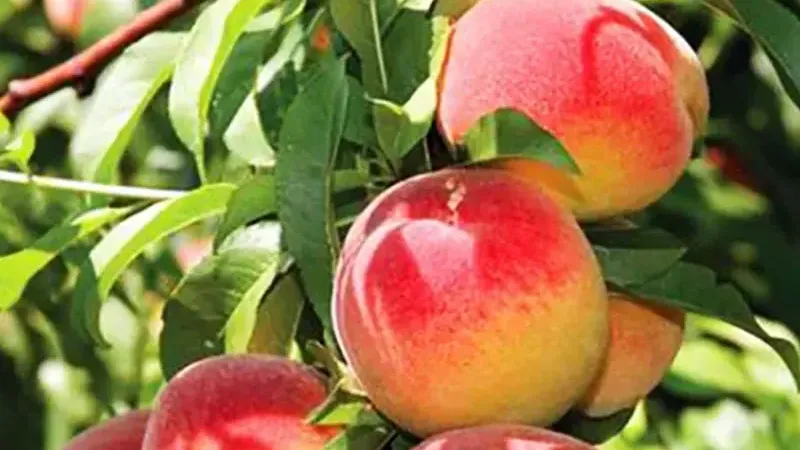
If you want to get the most out of peaches, two things are worth knowing. The concentration of phenolic compounds and anthocyanins in the skin is two to three times higher than in the flesh (Bassi et al., 2016; Cao et al., 2025). And colour reveals strength: cultivars with red skin and red flesh have a markedly higher antioxidant capacity than ordinary yellow or white peaches, thanks to their high anthocyanin content. Measurements show they match blueberries, which are often treated as the benchmark for antioxidants (Byrne et al., 2009).
HOW TO GET THE MOST FROM THE FRUIT
| Red-fleshed peach eaten with the skin – the highest antioxidant capacity, with a high anthocyanin content in both skin and flesh. |
| Yellow or white peach eaten with the skin – still a good source of phenolics and carotenoids, but lower in anthocyanins. |
| Peeled peach – along with the skin you remove the tissue with the highest concentration of active compounds. |
A tip for growers
Fruit from your own tree can be eaten with the skin without worrying about surface residues from transport and storage. That is why planting your own peach trees – ideally several cultivars with staggered ripening – is the most direct route to fruit from which nothing needs to be removed.
Conclusion
The peach is a complex natural medicine cabinet. The scientific evidence is clear on this point: the phytochemicals hidden beneath the velvet skin can protect blood vessels from oxidative damage and, under laboratory conditions, suppress the proliferation of aggressive cancer cells. A peach on its own is no miracle cure, but eating it regularly, skin included, is one of the tastiest and most natural ways to build a protective shield against the silent killers of our time.
|
Grow your own medicine cabinet Yellow, white and red-fleshed peaches rich in anthocyanins, cultivars with staggered ripening from July to September, and trees on rootstocks suited to our climate. Fruit from your own tree can be enjoyed with the skin on. Browse our peach cultivars |
Join fellow fruit growers Exchange growing experience, ask about cultivars and share your harvest with a community of keen fruit growers, talk to experts and be the first to get access to new articles. Follow us on Facebook |
← Swipe sideways →