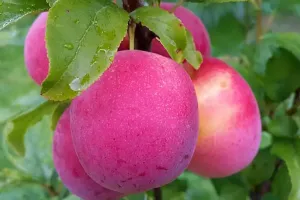
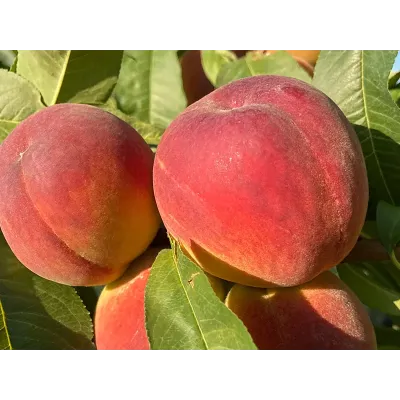
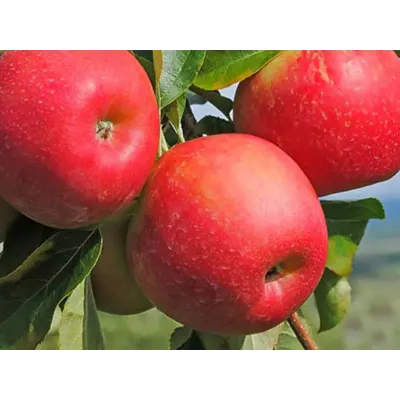
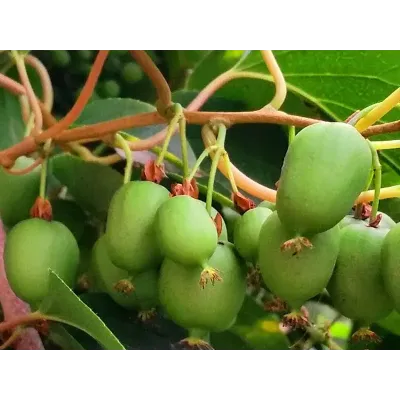
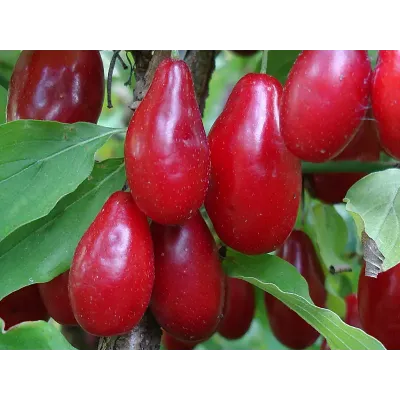
The limited offer of fruit trees represents an exclusive selection of rare and special varieties that are available only in limited quantities. Each t..
In this category, you will find a special selection of fruit trees and shrubs that we provide exclusively on the basis of a binding order. These items..
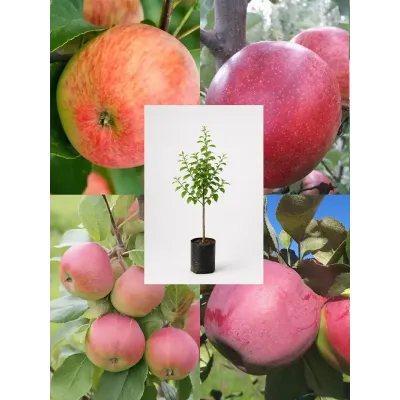
This category includes a specific type of fruit tree in which several different varieties of the same fruit are grafted onto a single trunk (rootstock..
- The shipping price depends on the weight of the ordered goods (the more products, the cheaper the price)
- after you have placed the plants in the shopping cart, enter “calculate provisional shipping price” in the shopping cart, after entering the data the eshop will calculate the provisional shipping price for you.
The standard delivery time is 2-5 working days.(except for goods "On request")
We send goods on Monday, Tuesday, Wednesday, by agreement also Thursday or Friday.
An exceptionally hardy and resilient Lithuanian variety featuring crack-resistant berries, rich muscat-fruity aroma, and versatile utility.
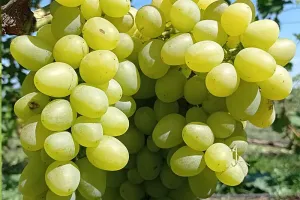
Grapevine 'Varduva' (Mid-late to late variety)
'Varduva' (syn. Vārduve) is an exceptionally robust and productive grapevine variety (interspecific hybrid) bred in Lithuania by Antanas Gailiūnas. Recognized as an important part of Lithuania's national plant genetic resources, it is prized for its proven reliability under harsh northern growing conditions. It stands out for its extreme cold hardiness, excellent disease resistance, and sweet, richly aromatic fruit.
Key advantages of the variety:
Extreme cold hardiness: Easily withstands frosts below -23 °C and short-term drops down to -28 °C to -30 °C, requiring no winter protection.
High disease resistance: Demonstrates strong natural resistance to fungal diseases, particularly downy mildew (peronospora).
Non-cracking berries: The thicker, firm skin ensures the berries remain crack-resistant even during rainy periods.
Versatile application: Excellent for fresh table consumption, pressing premium juices, or producing highly aromatic young wines with floral, muscat, and exotic fruit notes.
Fully self-fertile: Sets fruit reliably without needing a cross-pollinator; one-year-old wood matures very well before winter.
Fruit and Harvest
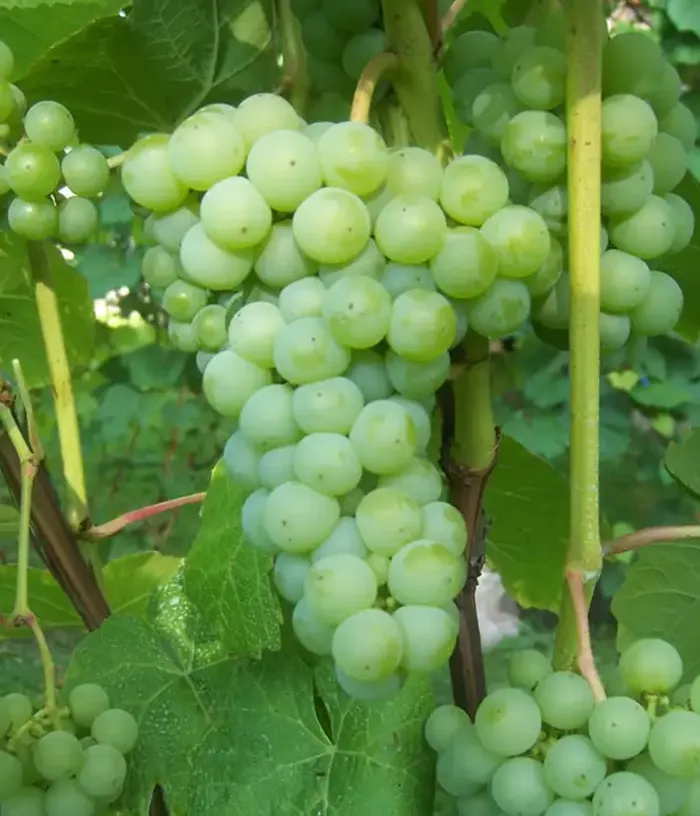
Cluster appearance: Medium-sized clusters (length 10 – 12 cm, weight 150 – 180 g) with an elongated cylindrical-conical shape resembling a corn cob (medium-dense to dense, sometimes single-winged, with short green-and-reddish stalks).
Berries and flesh: Medium-sized round berries (2 – 3 g) of a yellow-green color with a light amber blush on the sunny side. Flesh is meaty, juicy, and slightly gelatinous (characteristic of V. labrusca lines) containing 2 to 4 small seeds.
Flavor and sugar profile: Sweet and flavorful, harmoniously combining labrusca undertones with distinct muscat highlights. Sugar content reaches 18% with balanced acidity (5 – 7 g/l).
Harvest period: Second to third decade of September.
Cultivation, Pruning, and Limitations
Vigor and pruning: Shows medium to strong growth. A winter pruning load of 6 – 8 buds is recommended. Regular crop regulation and shoot thinning are essential to prevent vine overcropping.
Soil and site: Adaptable to most soils with a slight preference for mildly acidic conditions. While best against a warm south-facing wall, it matures reliably on open-field trellises.
Drawbacks and considerations: The thicker skin, seeds, and jelly-like texture may differ from modern crisp seedless table varieties. Very dense clusters in wet Septembers can occasionally be vulnerable to grey mold (botrytis).
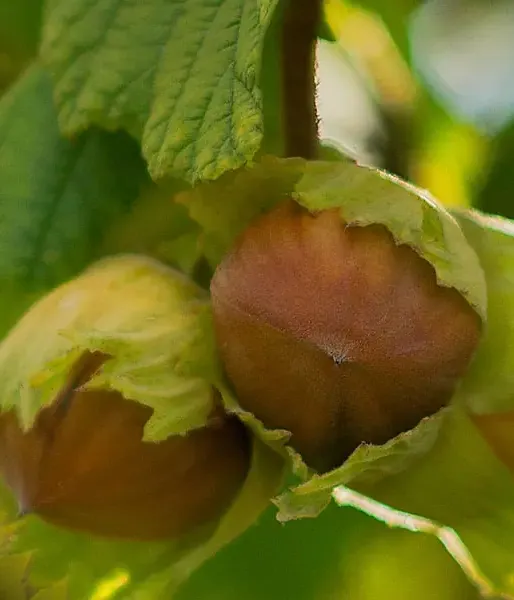
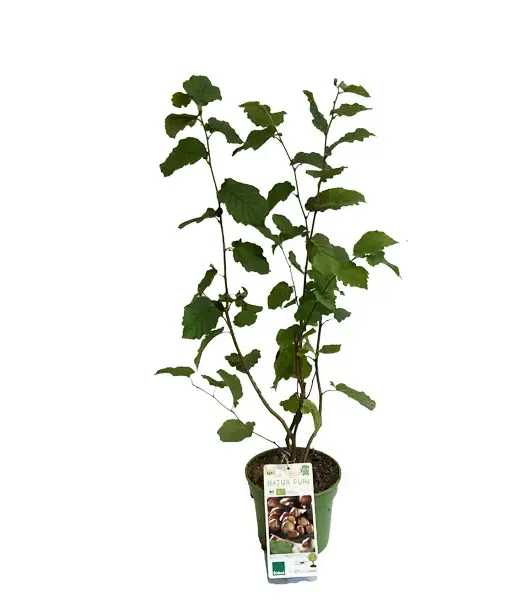
The hazel (Corylus avellana) is a popular tree or shrub in the common garden. It is one of the low-yielding species, as the main reason for growing ..