




Cart

Fig Tree (Ficus carica) MADELEINE DES DEUX SAISONS

Fig Tree (Ficus carica) MADELEINE DES DEUX SAISONS
New
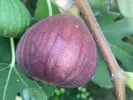
Fig Tree (Ficus carica) MADELEINE DES DEUX SAISONS
Specifications
Height at sale80-100cm
Pot2,5L
Sell as2 year old
Ripening timeSeptember/October
The standard delivery time is 2-5 working days.(except for goods "On request")
We send goods on Monday, Tuesday, Wednesday, by agreement also Thursday or Friday.
Price
39.00€
Ex Tax: 31.71€
  • Stock: In Stock
  • Model: Ficus carica

Fig Tree - Variety 'Madeleine des Deux Saisons' (Ficus carica)

The 'Madeleine des Deux Saisons' cultivar is a true aristocrat among fig trees. It brings not only breathtaking aesthetics to your garden but also a piece of authentic French royal history. This highly productive, cold-hardy fig is globally admired for its stunning golden-brown striped fruits that conceal a brilliant red interior. If you are searching for a tree that perfectly balances visual elegance, premium fruit quality, and reliable double harvests even in cooler climates, you have just found it.

Origins and Royal Heritage: This variety traces its roots back to the historic French region of Anjou. It was so highly favored at the French court that King Louis XIV ordered it to be planted extensively right in the gardens of the Palace of Versailles. Because of its divine taste and resilience in colder climates, it is also widely known by the synonym "Angélique" (Angelic). The name "Madeleine" pays homage to the famous French sponge cake, which King Louis XV named after his exceptional cook, Madeleine Paulmier. Finally, "des Deux Saisons" (of two seasons) highlights its fantastic ability to yield fruit twice a year.

Top Benefits of this Variety:

  • Visual Masterpiece: Gorgeous golden-brown striped fruits with contrasting bright red flesh.
  • Outstanding Flavor Profile: A refreshing, intensely sweet, and vibrant fruity taste.
  • Double Harvest (Bifera): Produces two crops a year, starting with an exceptionally early summer wave.
  • Excellent Cold Adaptation: The mature wood reliably withstands temperatures down to -15 °C (5 °F).
  • Self-Fertile: The variety is parthenocarpic and guarantees heavy, reliable yields.
  • Historical Value: A royal heirloom straight from the gardens of Versailles.

Detailed Plant Profile

Growth and Habit

  • Vigor: This tree has medium to vigorous growth. Unlike many spreading fig varieties, it naturally possesses an upright (vertical) growth habit. When planted in open ground, it reaches heights of 2.5 to 4 meters.
  • Pruning and Shaping: It responds beautifully to spring thinning and canopy shaping, allowing you to maintain an elegant form.

Fruits and Taste Profile – Two Crops

  • First Crop (Summer / Breba): Ranking among the earliest summer figs, it begins to ripen in early August on last year's wood. The fruits are large, plump, and round (100 – 120 g). The glossy skin is creamy-pink adorned with golden-brown stripes. The bright red flesh offers an intensely sweet and refreshing fruity flavor.
  • Second Crop (Main / Autumn): Ripens on new shoots from mid-September into October. These fruits are slightly smaller (70 – 80 g), more flattened, and lack a distinct neck. The autumn wave is usually much heavier and delivers a more concentrated flavor profile.

Cultivation and Hardiness

  • Pollination: Belonging to the Adriatic botanical group, this variety is fully self-fertile (parthenocarpic) and does not require the fig wasp to set fruit.
  • Cold Hardiness and Planting: Hardy down to -15 °C. It is best to plant 2 to 3-year-old trees outdoors. In colder zones, you must wrap the trunk and canopy with horticultural fleece during winter until the trunk reaches a thickness of 6 to 7 cm.
  • Plant Health: Displays exceptional overall vitality, featuring healthy wood and leaves, and remains largely unaffected by common pests.
  • Pro-Tip for Upright Varieties: Because the tree naturally wants to grow straight up, we recommend pinching off the tips of young green shoots in June. This halts vertical growth, encourages lateral branching, and forces the tree to redirect its energy into ripening the fruit.

Drawbacks of the Variety:

  • Requires specific pruning: Its upright nature means it demands regular summer pinching. If neglected, the tree will shoot upward at the expense of side branches and fruit production.
  • Needs Early Winter Protection: For the first few years after planting in the ground, thorough winter insulation is an absolute must.

Write a review

Note: HTML is not translated!
Rating
Bad Good
reCAPTCHA verification failed! Please try again.
Hurmi Kaki FUYU is one of Japan's large-fruited varieties, popular because the fruit can be eaten directly from the tree when ripe. In our country, it..
Price
39.00€
Ex Tax:31.71€
Add to Cart
Hurmi Kaki ROJO BRILLANTE is one of the Japanese large-fruited varieties, popular because the fruit is of the highest quality. In our country it can b..
Price
39.00€
Ex Tax:31.71€
Add to Cart