
































Jujube 'Lang' and 'Li': Chinese Date Cultivars for Drying and Fresh Eating

Jujube (Chinese Date): The Cultivars 'Lang' and 'Li'
Two traditional Chinese selections that surprise with their hardiness and flavour – one bred for drying, the other for crisp fresh eating
Jujube (Ziziphus jujuba), also known as the Chinese date, is one of the oldest cultivated fruit species in the world. It has been grown in the Yellow River valley in China for thousands of years, and that is exactly where both of the most widely planted traditional cultivars come from – 'Lang' and 'Li'. They share the same key strengths: extremely late bud break, high drought tolerance and early entry into bearing. In the kitchen, however, they represent two different worlds: 'Lang' is the global benchmark for drying, while 'Li' impresses with crisp flesh eaten fresh.
For growers in cool-temperate climates, the most valuable trait of the jujube is its spring rhythm. While apricots and peaches bloom at a time when frost is still a real threat, the jujube does not break bud until late April or May – in most years it simply sleeps through the late spring frosts.
|
−28 °C
winter hardiness of 'Lang'
|
25 g
average fruit weight of 'Li'
|
2nd year
first crop after planting
|
Sep – Oct
ripening period of the fruit
|
← Swipe the table sideways →
Origin and history
Both cultivars are traditional Chinese selections rather than the product of a modern breeding programme. 'Lang' comes from the fertile Yellow River (Huang He) valley and is among the oldest documented jujube cultivars in the world. For millennia it served the people of the region as a key energy store – the dried fruit keeps for many months without refrigeration. In China it is still regarded as the gold standard for traditional dried delicacies.
'Li' originates from the renowned Taigu region in Shanxi province and spread around the world mainly because of its fresh-eating quality. Today it is one of the most widely grown jujube cultivars of all.
The real magic of 'Lang' appears once the skin of the fruit begins to wrinkle slightly – that is the point at which sugar concentration peaks and the flavour turns distinctly caramel-like.
The cultivars in detail
Tree: vigorous and upright, reaching about 3 to 4 metres in height with a canopy 2.5 to 3 metres wide at maturity. It carries elegant glossy foliage and – a major advantage at harvest – shoots that are almost thornless.
Bud break and flowering: breaks bud exceptionally late, not until the beginning of May. It flowers gradually and over a long period, from June through to August.
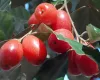
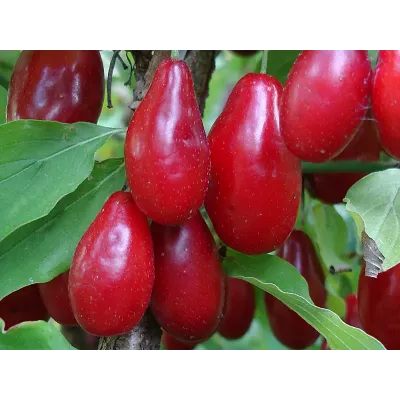
Fruit: medium-large to large drupes averaging 15 – 20 g, with selected fruit reaching up to 30 g. The typical pear shape makes the cultivar instantly recognisable. The skin is thin and smooth, colouring from green to an attractive mahogany or chestnut brown as it ripens.
Flesh: greenish to creamy white, firm and moderately juicy, containing one small spindle-shaped stone. Its higher dry matter and sugar content is what makes it ideal for drying.
Flavour: pleasantly sweet when fresh. Once dried, the flavour intensifies into a pronounced caramel note reminiscent of true dried dates.
Tree: vigorous, forming a spreading tree about 3 to 4 metres tall with a canopy roughly 3 metres wide at maturity. The foliage is glossy and the shoots are moderately thorny.
Bud break and flowering: breaks bud late, from the end of April into early May. As soon as the soil warms up, the tree pushes out quickly and grows with real vigour. Flowering is gradual, from June to August.
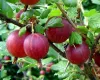
Fruit: medium-large to large oval drupes averaging around 25 g. The skin is thin and glossy, turning from greenish yellow to a deep mahogany as the fruit ripens.
Flesh: greenish to creamy white with one narrow spindle-shaped stone.
Two harvests, two flavours: at the greenish-yellow stage, with just a hint of browning, the flesh is remarkably crisp, very juicy and refreshing – the texture recalls the best fresh apple. Leave the fruit on the tree until it browns fully and wrinkles slightly, and it turns into a soft, sweet natural candy.
Value scales: hardiness and fruit weight
The scales below use only the figures given for each cultivar. The hardiness values apply to mature trees with well-ripened wood.
| 'Lang' | −28 °C |
| 'Li' | −23 °C |
Values are shown against a scale of 0 to −30 °C.
← Swipe sideways →
| 'Li' | about 25 g |
| 'Lang' | 15 – 20 g |
Values are shown against a scale of 0 to 30 g. The bar for 'Lang' marks the mid-point of the stated range (17.5 g); selected fruit reaches up to 30 g.
← Swipe sideways →
| Risk of damage from late spring frosts | low |
| low risk (very late bud break) | high risk (early bud break) |
An indicative placement of both cultivars based on their bud break date (late April to early May), not a measured value.
'Lang' and 'Li' side by side
| Trait | 'Lang' | 'Li' |
|---|---|---|
| Origin | Yellow River valley, China | Taigu, Shanxi province, China |
| Average fruit weight | 15 – 20 g (up to 30 g for selected fruit) | about 25 g |
| Fruit shape | pear-shaped | oval |
| Skin colour when ripe | mahogany to chestnut brown | deep mahogany |
| Flesh | firm, moderately juicy, higher dry matter | juicy, crisp at the earlier stage |
| Main use | drying (Chinese dates) | fresh eating and drying |
| Thorniness of shoots | almost thornless | moderately thorny |
| Winter hardiness | down to −28 °C | down to −23 °C |
| Pollination | partially self-fertile | partially self-fertile |
| Entry into bearing | often in the 2nd year after planting | often in the 2nd year after planting |
| Ripening | gradually from mid-September into October | gradually from September into October |
← Swipe the table sideways →
A visual guide to harvesting by fruit colour
| Fully green, hard fruit – do not pick yet. The flavour has not developed and the sugar content is low. | |
| Greenish yellow with a hint of browning – the ideal stage for crisp fresh eating, above all with 'Li'. | |
| Mahogany, skin starting to wrinkle – peak sugar concentration and time to dry the fruit. This is the target stage for 'Lang'. |
Harvest, processing and storage
The fruit of both cultivars ripens gradually, so harvesting takes place in several passes. With 'Lang', the best flavour is achieved by letting the fruit dry naturally on the tree. Dried fruit then keeps for many months without any loss of quality.
Dried jujubes make an excellent naturally sweet snack with tea. Chopped, they work well in baked desserts in place of dates and candied fruit.
Soak the dried fruit briefly in hot water before eating and it regains its softness and juicy texture.
Winter protection for young plants. The hardiness figures given above apply to mature trees with ripened wood. Young plants – especially 'Li' – are best protected with mulch for their first few winters and planted in the warmest available spot in cooler regions.
Pollinator. Both cultivars are only partially self-fertile. They do crop reliably as single specimens, but for even, full yields a second jujube cultivar for cross-pollination is recommended. Insects play a significant part in pollen transfer.
Thorns on 'Li'. The shoots are moderately thorny, so harvesting and pruning call for care and sturdy gloves.
Which cultivar should you choose?
|
Choose 'Lang' if…
you want to make your own dried Chinese dates with a caramel flavour, you value almost thornless shoots, you are looking for the highest hardiness (down to −28 °C), and you do not mind flesh that is only moderately juicy when fresh.
|
Choose 'Li' if…
you want to eat the fruit straight off the tree, larger fruit (around 25 g) and a crisp apple-like texture appeal to you, you want one cultivar for both fresh eating and drying, and you can give young plants winter protection.
|
← Swipe sideways →
The ideal solution is to plant both cultivars side by side. You gain two completely different culinary experiences and the cultivars also serve as pollinators for each other, which shows directly in how even the crops are. Thanks to their high natural resistance to fungal diseases, pests and drought, both cultivars are well suited to chemical-free organic growing.
|
Jujube from our range
Choose jujube cultivars for drying as well as for crisp fresh eating – hardy, low-maintenance trees that often crop in their second year after planting.
Sales of the aforementioned varieties will likely begin on September 15, 2026. Visit the shop → |
Join our growers
Swap growing experience, ask about cultivars and share your harvest on our Facebook page full of keen fruit growers, talk to specialists and be the first to get access to new articles. Follow us → |