

























Asimina triloba (Pawpaw): A Guide to Growing the North American Banana | Blog

Asimina triloba (Pawpaw): The Biography of America's Forgotten Fruit
In the shadow of more famous fruit trees lies a true treasure—the Pawpaw (Asimina triloba), the tree with the largest native edible fruit in North America. This "Indian banana" was long a forgotten fruit, but today it is experiencing a renaissance thanks to its unique flavor profile, high nutritional value, and ecological advantages.
Let's uncover the fascinating life story of this unique tree, which combines the exotic allure of the tropics with the hardiness of the temperate zone.
A Journey Through History: From Mammoths to American Presidents
The Pawpaw is no novelty. Fossil records of its genus date back millions of years. It is believed that its seeds were originally dispersed by now-extinct megafauna. Later, Native Americans fell in love with it, cultivating and selecting it purposefully.
"American Presidents George Washington and Thomas Jefferson also fell in love with the Pawpaw, growing it in their own gardens."
Pawpaw fruits served as an important food source for European settlers and are also known from the journals of the Lewis and Clark Expedition, which helped them survive on their journey back.
Anatomy of an Exotic: What Makes the Pawpaw So Special?
- The Tree: Grows to a height of 3 to 12 meters. It tends to form root suckers and create dense thickets.
- The Leaves: Large, up to 30 cm long, with a tropical appearance. In autumn, they turn a vibrant yellow.
- The Flowers: Unique, dark red to brown, appearing in spring even before the leaves. Their scent, reminiscent of meat, attracts specific pollinators—flies and beetles.
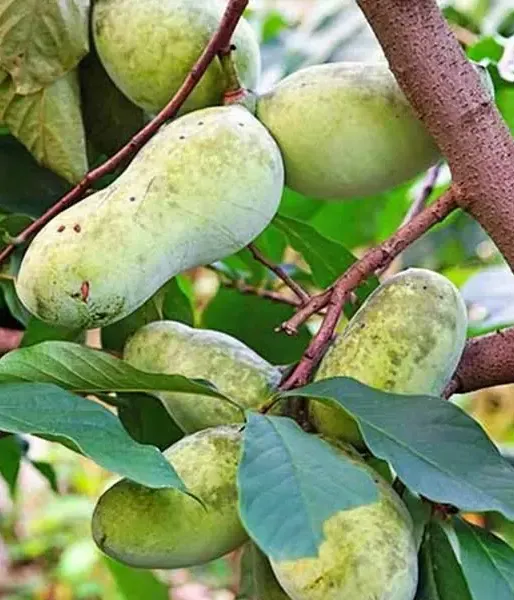
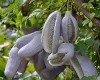
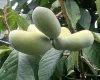
- The Fruit: The largest native berry in North America (up to 500 g). The pulp has a creamy, custard-like texture and a complex, sweet flavor resembling a mix of banana, mango, and pineapple.
- Nutritional Value: The fruits are exceptionally nutritious, rich in vitamins A and C, magnesium, iron, and potassium.
- In-built Protection: The entire plant contains annonaceous acetogenins, compounds with strong insecticidal properties. This makes the Pawpaw virtually pest-free.
Expert Tip: The Secret to Successful Pollination
The Pawpaw is tricky. Although it has perfect (bisexual) flowers, it cannot self-pollinate. The stigma matures before the pollen. Moreover, most varieties are self-incompatible. Therefore, for a successful harvest, it is essential to plant at least two genetically different varieties close to each other (within 8-10 meters).
Growing Guide: How to Do It Right
Basic Requirements
- Climate: It is fully frost-hardy down to approx. -26 °C. It requires warm summers and cold winters.
- Soil: It prefers deep, fertile, and well-drained soils with a slightly acidic to neutral reaction (pH 5.5–7.0).
- Light: Young saplings (the first 1-2 years) are sensitive to direct sun and require shade! However, mature trees need full sun for a bountiful harvest.
Propagation and Care
- Seeds: Must never dry out and require cold stratification (90-120 days in the refrigerator).
- Grafting: To preserve the characteristics of a specific variety, vegetative propagation, most commonly grafting, is necessary.
- Pruning: Not essential, except for removing damaged branches.
A Gallery of Personalities: An Overview of Proven Varieties
Comparison of Key Features
| Variety | Fruit Size | Pollination | Key Feature |
|---|---|---|---|
| Sunflower | Medium | Self-fertile | Low-Maintenance |
| Overleese | Large | Cross-pollination | High Yield |
| Convis | Large (up to 450g) | Cross-pollination | Fruit Size |
- 'Sunflower': The most well-known and widespread self-fertile variety. It is a reliable choice for smaller gardens where there isn't space for two trees.
- 'Overleese': A very productive, cross-pollinating variety with large fruits of excellent flavor.
- 'Davis': An old and popular cross-pollinating variety with smaller but high-quality fruits.
- 'Wells': A cross-pollinating variety with orange flesh and excellent taste.
- 'Convis': A cross-pollinating variety that produces very large fruits, up to 450 g.
Bring a Piece of America to Your Garden
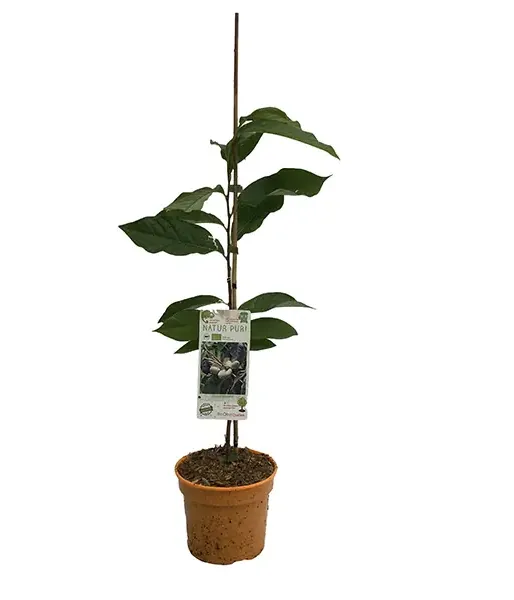
The Pawpaw is more than just a fruit. It is a tree with a story that combines the exotic with hardiness. It's a chance to taste something that Native Americans and the first presidents of the USA ate. Discover strong, grafted Pawpaw saplings in our selection and start growing this unique treasure.
Do you have experience growing Pawpaws? Let us know in the comments!
Related Products