





























The Sweetest Gooseberries: Top 5 Dessert Cultivars from the East

Say goodbye to the sour face: the sweetest gooseberries of the East that taste like honey
Top 5 dessert cultivars from Russia, Belarus and Latvia – a detailed grower's profile
Mention gooseberries and many of us instantly recall a childhood memory: a hard green berry that made the whole face pucker at the first bite. The myth of the gooseberry as a fruit fit for nothing better than stewing has long been overturned. While in Central Europe gooseberries were often grown as a secondary crop, breeders in Russia, Belarus and Latvia spent decades of hard work turning this prickly bush into the king of summer desserts.
The East European breeding school ranks among the very best in the gooseberry world. Its aim was not only hardiness against severe frost and against the dreaded American gooseberry mildew, but above all a complete change in the flavour profile of the fruit. The result is a group of so-called dessert cultivars: gooseberries with thin skin, tender flesh, a high content of natural sugars and an aroma that often recalls honey, plums or even wild strawberries.
|
5
dessert cultivars
|
9.5%
highest sugar content
|
7.5 g
largest single berry
|
5 / 5
top tasting score
|
← Swipe the table sideways →
If you are looking for fruit your children will pick straight from the bush with enthusiasm, here is a detailed profile of the five sweetest cultivars from the post-Soviet region.
Five cultivars that change how you see gooseberries
Value scales: berry size and acidity
The scales below show figures stated directly in the cultivar profiles above. For berry size the upper limit of the quoted range is plotted, and the scale is set to 8 g, a realistic maximum for large-fruited gooseberries.
| Uralsky Izumrud | 7.5 g |
| Krasnoslavyansky | 6.0 g |
| Masheka | 4.0 g |
| Kursu dzintars | 2.7 g |
← Swipe sideways → – upper limit of the stated berry weight, scale 0–8 g. Tukuma konfeksu is absent here because no specific weight is given for it.
The second scale shows the acid content of Uralsky Izumrud fruit. In dessert gooseberries lower acidity is favourable, because it allows the sweetness and aroma to come through. The scale is set to a range of 0–5%, which covers the values usually found in gooseberries.
| Acid content – Uralsky Izumrud | 2.2% |
| low acidity (dessert flavour) | high acidity (better for processing) |
Cultivar comparison at a glance
| Cultivar | Origin | Berry weight | Colour | Sugars / acids | Tasting score | Yield per bush | Mildew resistance |
|---|---|---|---|---|---|---|---|
| Uralsky Izumrud | Russia (South Ural) | 3.5–7.5 g | emerald green | 9.3% / 2.2% | 5.0 | 6–10 kg | high |
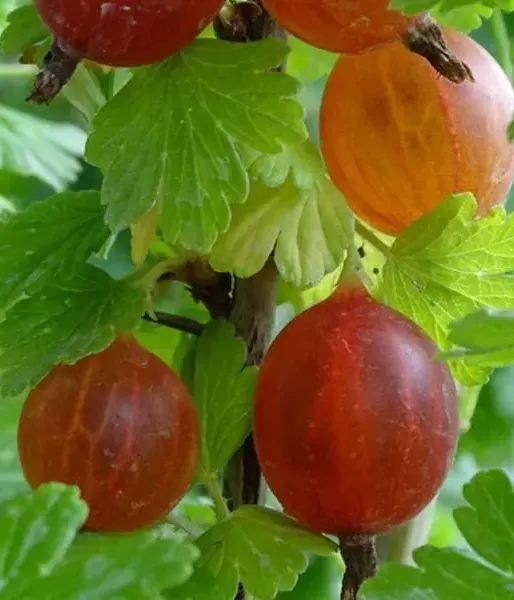
| Krasnoslavyansky | Russia (Leningrad stn.) | 3.9–6 g | cherry red | not stated | 4.5–5.0 | 5–6 kg | moderate |
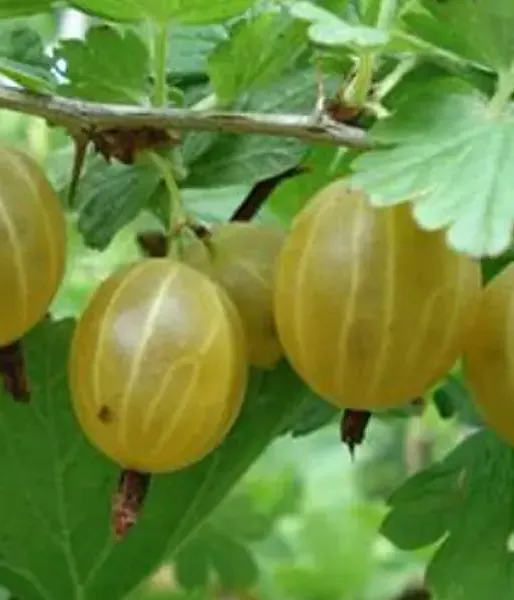
| Kursu dzintars | Latvia | 2.2–2.7 g | amber yellow | not stated | 4.5–5.0 | 4–6 kg | moderate |
| Tukuma konfeksu | Latvia | medium to large | pinkish, translucent | not stated | not stated | not stated | moderate |
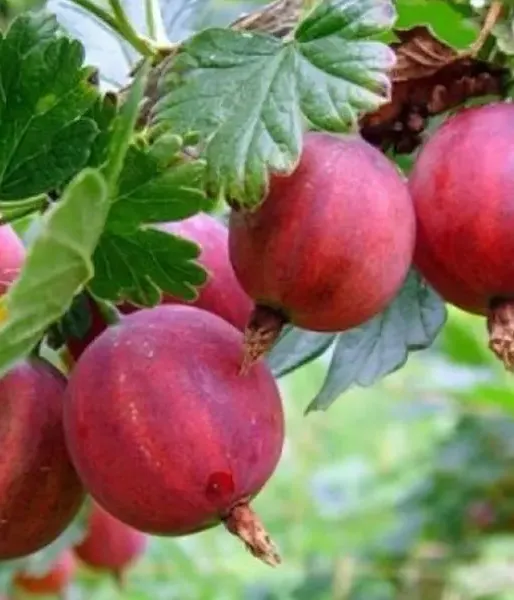
| Masheka | Belarus | 3–4 g | brick red | 9.5% / 2.2% | 4.0–4.5 | about 6 kg | moderate |
← Swipe the table sideways →
The secret of perfect flavour: do not rush the harvest
To get the very best from these top East European cultivars, specialists advise one crucial thing: patience.
A gooseberry picked at technical ripeness is a raw material. A gooseberry picked at botanical ripeness is a dessert. Between those two states lie one or two extra weeks on the bush.
Many gardeners pick gooseberries at so-called technical ripeness, when the fruit has coloured up but is still hard. At that stage it is excellent for preserving and jam making, because it is rich in pectin. If you want to experience the true dessert, honeyed flavour, however, you have to wait for botanical ripeness. Leave the fruit on the bush for another week or two. Cultivars such as Uralsky Izumrud or Kursu dzintars literally soften in the sun, their skin thins and the sugar content rises to its maximum. Thanks to sound breeding you need not fear that these modern cultivars will drop their fruit prematurely.
| Unripe fruit – hard, poorly coloured, markedly sour. It is too early to pick; the sugars are still forming. | |
| Technical ripeness – the fruit has coloured up but is still firm. Ideal for jams, preserves and freezing thanks to its high pectin content. | |
| Botanical ripeness – the berry gives slightly under the fingers, the skin is thin and the aroma pronounced. This is the state dessert cultivars are grown for. |
Krasnoslavyansky, Kursu dzintars, Tukuma konfeksu and Masheka have only moderate resistance to American gooseberry mildew. In seasons with a warm, humid early summer, choose an airy site, open the bush up with regular pruning and consider preventive protection before fruit set. An overcrowded bush in a damp corner of the garden is the most common cause of infection.
Although most modern gooseberries are self-fertile, cross-pollination between different cultivars increases fruit set, berry size and the consistency of yields from season to season. Combine early and mid-early cultivars in your garden: you will not only secure better pollination but also extend the picking season by several weeks.
Conclusion
As you can see, gooseberries are no longer the feared sour fruit we avoided as children. Thanks to the skill and patience of breeders in Russia, Belarus and Latvia, we can now enjoy fruit whose sweetness, tenderness and honeyed aroma stand comparison with grapes or even with tropical fruit.
Give these eastern jewels a chance. Your garden gains undemanding, frost-hardy bushes, and you – above all your children – will discover a completely new, honey-sweet side to this traditional fruit. Picking gooseberries turns from a chore into the most eagerly awaited tasting of the summer.
|
Dessert gooseberries for your garden
Our shop offers proven dessert gooseberry cultivars with thin skin and honeyed sweetness, from emerald green to brick red. Healthy, well-rooted bushes ready for planting, each with a cultivar description and a pollinator recommendation. Browse gooseberry cultivars |
Join our growers
Swap growing experience, ask about cultivars and share your harvest on our Facebook page full of keen fruit growers, talk to specialists and get early access to new articles. Visit our page |
Related Products