





































Compost vs. Vermicompost: Comparison & Guide
Clash of Titans in the Garden: Compost vs. Vermicompost – Detailed Analysis, Differences, and How to Combine Them
Although both processes convert organic waste into valuable fertilizer, they operate on fundamentally different principles and produce different results. While classic compost is about heat and microbes, vermicompost is about cold digestion and earthworms. Which one is better? And can they be combined?
“Vermicompost is not just 'better compost', it is a biological stimulant packed with hormones. Classic compost, on the other hand, is an irreplaceable source of organic matter. It is ideal to have both.”
Part 1: Classic Compost (Hot Process)
Compost is the result of controlled aerobic thermophilic decomposition. Bacteria and fungi play a key role, generating heat during their work.
How Does It Work?
You mix nitrogen-rich "green" material (grass, manure) with carbon-rich "brown" material (leaves, wood chips). If the volume is sufficient (at least 1 m³), microorganisms heat the core to 55-70 °C. This temperature is critical – it kills pathogens and weed seeds.
Advantages of the Classic
It processes large amounts of waste (including branches), sanitizes the material, and is relatively maintenance-free (except for turning). The result is a good source of nutrients that are released more slowly.
Part 2: Vermicompost (Cold Process)
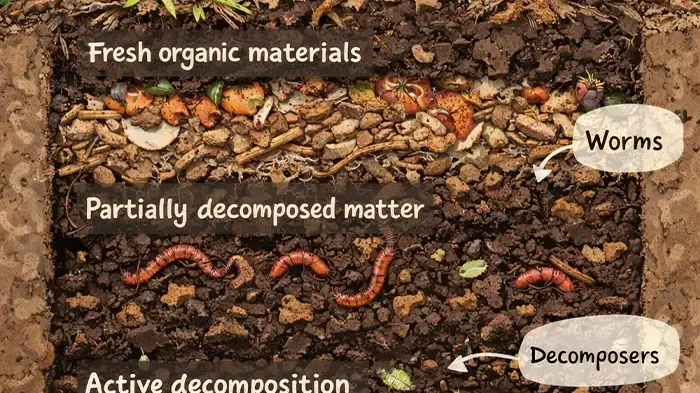
Here, earthworms rule (most often Eisenia fetida). It is not just decomposition, it is digestion. Material passes through the worm's gut, where it is enriched with enzymes.
How Does It Work?
The process takes place at 15-25 °C. The temperature must not rise, otherwise the worms will dye. They feed on soft waste (peels, coffee grounds). The result is excrement – a fine, black mass.
Unique Properties:
- Growth Hormones: Contains auxins and gibberellins that stimulate germination and growth (classic compost does not have this).
- Solubility: Nutrients are immediately available to plants.
- Humic Substances: Contains up to 50% more than regular compost.
Part 3: Big Comparison
| Feature | Classic Compost | Vermicompost |
|---|---|---|
| Temperature | Hot (55-70°C) | Cold (15-25°C) |
| Time | 3-12 months | 2-4 months |
| Pathogens/Weeds | Destroyed by heat | Survive (without heat) |
| Bonus | Volume for soil | Growth hormones |
Part 4: Earthworms in Classic Compost? My Personal Guide
Personally, I advocate combining both worlds. But beware – simply throwing worms into a fresh pile is a death sentence for them. Temperatures above 35 °C will kill them.
Warning: Temperature Shock
Active compost has 60 °C in the core. If you put worms there, you will cook them. Likewise, they will not survive in an overly acidic fermentation environment.
Success Tactic: Two-Phase Composting
This is the safest way to get super-fertilizer for free:
- Hot Phase (Classic): Start the compost, let it heat up properly, and turn it. This destroys weeds and pathogens.
- Cold Phase (Vermicompost): When the temperature drops below 30 °C and the material smells like forest (is partially decomposed), introduce California earthworms. They have ideal food and a safe environment.
This way, you get the best of both: sanitization from the first phase and enormous enrichment with nutrients and hormones from the second phase. You can easily increase the content of humic substances from 5-20% to 10-30%. It is a one-time investment in worms that pays off many times over.
Get advice on composting!
Do you have questions? Our community of experienced gardeners will advise you.
Follow us on Facebook ➤